

Blog
Ergonomics in Knee Protection: Pain-Free Performance


Running the streets of Paris brings intense moments of competition, but every stride puts the knee’s complex structure at risk. For athletes and runners, understanding ergonomics in knee protection is vital for staying active and avoiding lasting injury. With leading research showing that repetitive motions and improper joint alignment dramatically increase knee problems, this guide reveals expert strategies and the latest technologies to help you strengthen performance while safeguarding your most crucial joint.
Table of Contents
- Defining Ergonomics In Knee Protection
- Types Of Knee Supports And Technologies
- How Ergonomic Design Prevents Injury
- Risks Of Poor Knee Ergonomics
- Comparing Professional And Everyday Solutions
Key Takeaways
| Point | Details |
|---|---|
| Understanding Knee Ergonomics | Focus on biomechanical analysis and load distribution to prevent knee injuries through optimized movement patterns. |
| Types of Knee Supports | Various knee support options like stabilizing braces and compression sleeves cater to different activity levels and injury prevention needs. |
| Importance of Ergonomic Design | Proper ergonomic design reduces knee strain and enhances joint health, emphasizing strategies for effective load distribution and movement optimization. |
| Risks of Poor Ergonomics | Neglecting knee ergonomics can lead to chronic pain and musculoskeletal disorders, underlining the necessity of proper positioning and supports. |
Defining Ergonomics in Knee Protection
Ergonomics in knee protection represents a specialized approach to preventing musculoskeletal disorders and reducing strain on the human body’s most complex joint. At its core, ergonomics focuses on designing environments, equipment, and processes that minimize physical stress and optimize human performance. For athletes and active individuals, understanding knee ergonomics means protecting this critical joint from potential injuries and long-term damage.
The fundamental principles of knee ergonomics center on three critical areas:
- Biomechanical Analysis: Understanding how movement patterns and body mechanics impact knee health
- Load Distribution: Strategically reducing concentrated stress on knee joints during physical activities
- Preventative Design: Creating support systems that proactively protect against potential injuries
Research from international health organizations highlights that ergonomic risk factors significantly impact knee health. Repetitive motions, prolonged standing, and improper joint positioning can dramatically increase the likelihood of developing knee-related musculoskeletal disorders. Professional athletes and active individuals must therefore adopt comprehensive strategies that integrate ergonomic principles into their training and daily movement patterns.
Occupational and Sports Perspectives
In both professional sports and workplace environments, knee ergonomics plays a crucial role in injury prevention. Biomechanical awkward postures contribute significantly to knee strain, making it essential to develop strategies that minimize unnecessary joint stress. This involves:
- Analyzing individual movement patterns
- Implementing targeted strength training
- Using appropriate protective equipment
- Practicing proper technique during physical activities
Pro tip: Invest in a professional biomechanical assessment to understand your unique movement patterns and potential knee stress points.
Types of Knee Supports and Technologies
Knee support technologies have evolved dramatically, offering athletes and active individuals advanced solutions for injury prevention and performance enhancement. Modern knee supports range from simple compression sleeves to sophisticated biometric braces that provide targeted protection and real-time joint analysis. Understanding these technologies is crucial for selecting the right support for individual needs and activity levels.
The primary categories of knee supports include:
- Compression Sleeves: Provide basic joint warmth and mild support
- Stabilizing Braces: Offer enhanced lateral movement control
- Prophylactic Supports: Designed for preventative protection during high-impact activities
- Functional Rehabilitation Braces: Aid recovery from existing knee injuries
Innovative knee brace technologies demonstrate remarkable diversity in design and functionality. Researchers have identified several critical fixation methods that enhance knee joint protection, including:
- X-shaped patellar straps
- Double-layer protective systems
- Single-layer adjustable supports
- Advanced magic tape protectors
Advanced knee support technologies now incorporate sophisticated features like smart sensor integration and biomechanical analysis systems. Wearable knee brace innovations now utilize cutting-edge actuation technologies that can analyze gait patterns, reduce joint stress, and provide real-time feedback on movement mechanics.
Here’s how major ergonomic knee support types compare in terms of technology and usage focus:
| Support Type | Key Technology | Primary User | Unique Benefit |
|---|---|---|---|
| Compression Sleeve | Elasticized fabric | Everyday athlete | Mild support, joint warmth |
| Stabilizing Brace | Hinged design | Sports professional | Lateral control, stability |
| Prophylactic Support | Impact-absorbing layers | High-impact athlete | Prevents acute injuries |
| Functional Rehab Brace | Adjustable straps | Injury recovery | Guided movement, protection |
Pro tip: Consult with a sports physiotherapist to match your specific knee support needs with the most appropriate technological solution.
How Ergonomic Design Prevents Injury
Ergonomic design represents a critical strategy for preventing knee injuries by systematically addressing biomechanical stress and movement patterns. The human knee, a complex joint subjected to significant daily strain, requires targeted interventions that redistribute forces and minimize cumulative trauma. Understanding these design principles can dramatically reduce the risk of chronic pain and potential long-term joint damage.
Key ergonomic strategies for knee injury prevention include:
- Load Distribution: Spreading physical stress across multiple muscle groups
- Movement Optimization: Designing supports that guide natural joint mechanics
- Pressure Reduction: Minimizing concentrated forces on specific knee structures
- Dynamic Support: Creating adaptable protection that responds to different activities
Ergonomic interventions for knee protection focus on several critical approaches:
- Implementing job rotation strategies
- Alternating between sitting and standing positions
- Using supportive seating and protective equipment
- Developing targeted movement protocols
Research demonstrates that proper ergonomic posture with specialized kneepads significantly reduces knee joint forces during high-stress activities. By strategically redistributing mechanical loads, ergonomic designs can prevent compression and minimize the risk of cumulative joint trauma.

This table summarizes the effects of ergonomic design on knee health outcomes:
| Ergonomic Strategy | Impact on Knee Health | Recommended For | Example Intervention |
|---|---|---|---|
| Load Distribution | Reduces chronic pain risks | Workers, athletes | Dual-layer kneepads |
| Movement Optimization | Improves joint efficiency | Active individuals | Biometric braces |
| Pressure Reduction | Lowers risk of joint trauma | Those with past injuries | Cushioned supports |
| Dynamic Support | Facilitates safe activity | Multi-activity users | Smart wearable braces |
Pro tip: Incorporate periodic movement breaks and dynamic stretching to maintain knee joint flexibility and reduce prolonged stress.
Risks of Poor Knee Ergonomics
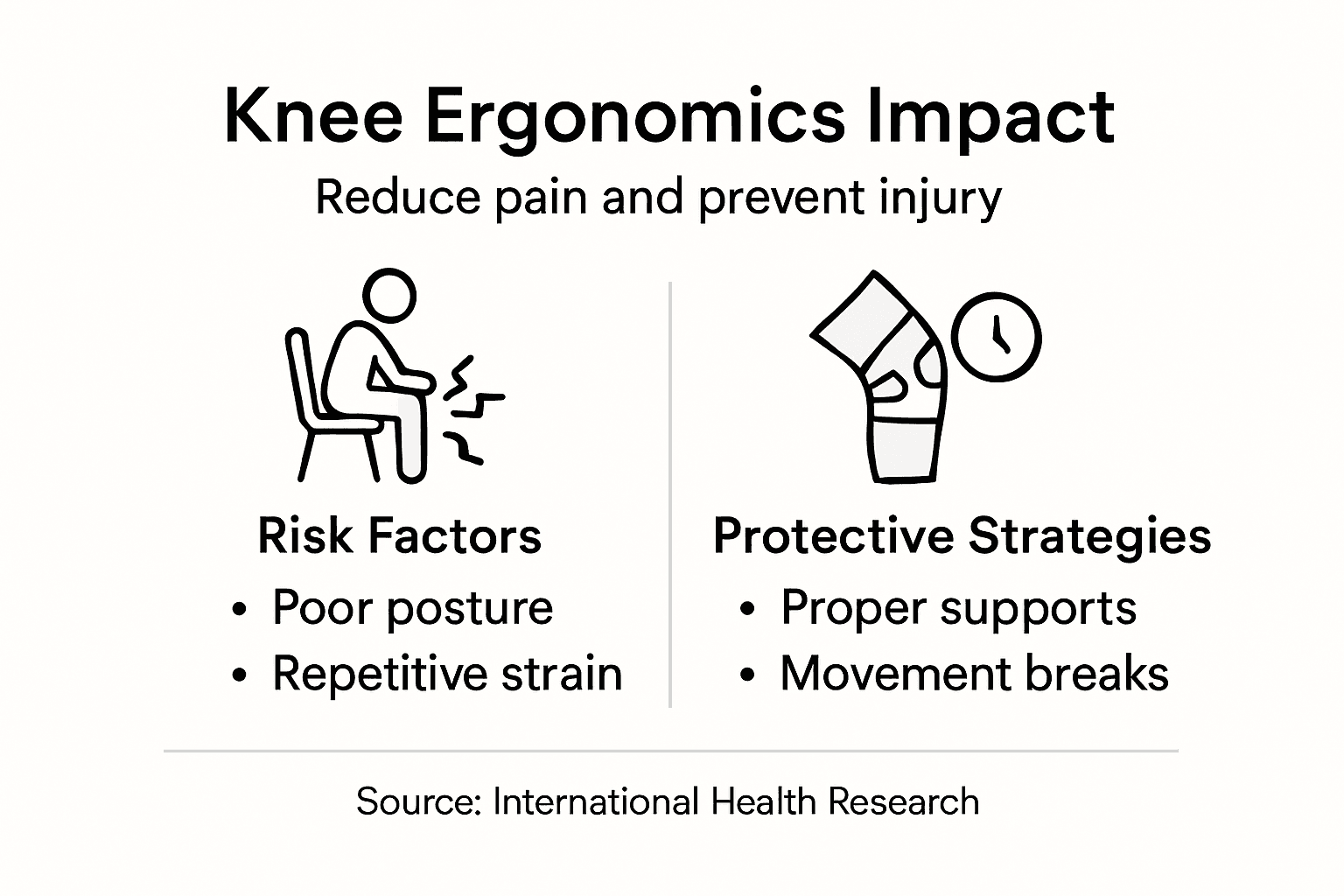
Poor knee ergonomics can lead to devastating long-term health consequences that extend far beyond temporary discomfort. The human knee, a complex and critically important joint, is particularly vulnerable to cumulative damage from repetitive stress, awkward positioning, and insufficient support. Understanding these risks is essential for preventing chronic pain and potential career-limiting injuries.
The most significant risks associated with poor knee ergonomics include:
- Chronic Pain Development: Persistent joint discomfort that reduces quality of life
- Musculoskeletal Disorders: Progressive joint deterioration and reduced mobility
- Decreased Work Performance: Reduced efficiency and potential career limitations
- Long-Term Disability Potential: Increased risk of early career changes
Occupational knee ergonomics research reveals alarming patterns of risk for professionals in physically demanding roles. Healthcare workers, athletes, and manual laborers face particularly high risks from:
- Repetitive bending movements
- Prolonged standing without proper support
- Awkward postural positioning
- Insufficient recovery periods
Systematic reviews of workplace conditions demonstrate that consistent exposure to poor ergonomic environments significantly increases the likelihood of developing knee osteoarthritis and other debilitating musculoskeletal diseases. The mechanical stress accumulates gradually, creating a silent but progressive threat to joint health.
Pro tip: Conduct a personal ergonomic assessment of your daily activities to identify and mitigate potential knee stress points before they develop into serious health issues.
Comparing Professional and Everyday Solutions
The landscape of knee protection encompasses a diverse range of solutions tailored to different activity levels and specific needs. Professional-grade and everyday knee supports represent two distinct approaches to joint health, each designed with unique considerations for performance, comfort, and injury prevention.
Key differences between professional and everyday knee solutions include:
- Complexity: Professional solutions typically feature more advanced technological integrations
- Specificity: Specialized supports targeting precise biomechanical requirements
- Durability: Higher-grade materials and construction in professional-level products
- Customization: Greater adaptability to individual movement patterns
Specialized knee support technologies reveal fascinating distinctions in design approaches:
- Sports and clinical settings use double-layer protectors
- Everyday users prefer single-layer magic tape supports
- Professional solutions prioritize maximum structural support
- Consumer solutions emphasize comfort and basic protection
Ergonomic intervention strategies demonstrate that professional and everyday solutions differ fundamentally in their approach to knee protection. While professional technologies often involve sophisticated exoskeleton designs and advanced biomechanical analysis, everyday solutions focus on practical movement management through workplace strategies like sit-stand chairs and job rotation techniques.
Pro tip: Match your knee support solution to your specific activity level and movement requirements for optimal protection and performance.
Elevate Your Knee Protection with Ergonomic Solutions
The article highlights the critical challenge of protecting your knees from chronic pain and injury caused by poor ergonomics and improper support. If you struggle with knee strain from repetitive movements, prolonged standing, or intense athletic activity, incorporating ergonomic knee supports designed for load distribution and movement optimization is essential. Key pain points include minimizing joint stress, preventing chronic conditions, and maintaining pain-free, fluid movement.
At KneeSolution, we offer professional-grade knee pads and braces engineered to stabilize your knee with lateral supports and compression technologies. Designed for both athletes and daily users, our products align perfectly with the article’s emphasis on biomechanical analysis and dynamic support. Complement your protection strategy with our knee recovery devices, featuring hot-cold therapy and vibration technology that accelerate healing and reduce inflammation.
Ready to experience the benefits of ergonomics in knee care? Discover how scientifically designed supports can transform your performance and comfort today.
Protect your knees the smart way at KneeSolution. Choose your ergonomic support now and take action against knee pain before it limits your performance or daily life.
Frequently Asked Questions
What is ergonomics in knee protection?
Ergonomics in knee protection focuses on designing equipment and processes to reduce strain on the knee joint, preventing injuries and promoting optimal performance for athletes and active individuals.
How can poor knee ergonomics affect my health?
Poor knee ergonomics can lead to chronic pain, musculoskeletal disorders, decreased work performance, and increased risk of long-term disability due to repetitive stress and improper joint positioning.
What types of knee supports are available for injury prevention?
Knee supports include compression sleeves for mild support, stabilizing braces for lateral control, prophylactic supports for high-impact prevention, and functional rehabilitation braces to aid recovery from injuries.
How can ergonomic design strategies prevent knee injuries?
Ergonomic design strategies prevent knee injuries by redistributing mechanical loads, optimizing movement patterns, and reducing pressure on specific structures, thus minimizing the risk of chronic pain and trauma.
Recommended
- Home 2 – KneeSolution
- KneeSolution – Sports & Orthopedic Knee Braces | Knee Protection and Recovery – KneeSolution
- KneeSolution – Sports & Orthopedic Knee Braces | Knee Protection and Recovery – KneeSolution
- Why Protecting Your Thigh, Calf, and Achilles Tendon is Essential for Healthy Knees – KneeSolution
- Why Joint Health Matters for Active Lifestyles
- Why Chiropractic for Sports Injuries Matters Most
