

Blog
Athletic Knee Protection Guide for Injury-Free Performance

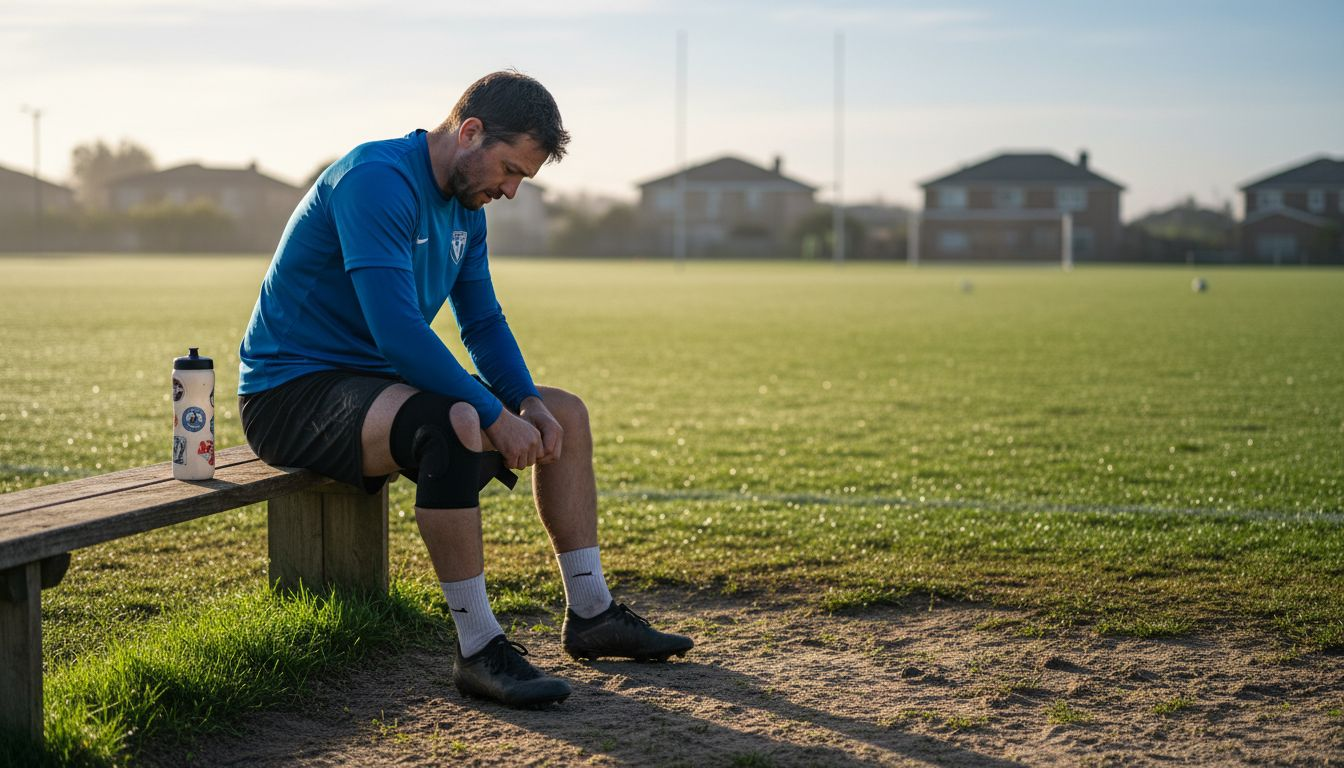
Long training cycles and high mileage often leave runners in France questioning how best to safeguard their knees before the next marathon. Targeted movement analysis can uncover biomechanical risk factors that threaten joint health, making comprehensive knee protection an essential part of every competitive training plan. This guide explains how personalized assessment, professional-grade gear, and scientific recovery strategies work together to keep your knees strong and resilient, so you can focus on performance without fear of injury.
Table of Contents
- Step 1: Assess Individual Knee Protection Needs
- Step 2: Select Professional-Grade Athletic Knee Gear
- Step 3: Fit Knee Supports to Optimize Comfort
- Step 4: Apply Recovery Devices for Enhanced Healing
- Step 5: Verify Effectiveness Through Pain-Free Movement
Quick Summary
| Key Point | Explanation |
|---|---|
| 1. Assess Individual Needs | Conduct a personalized knee protection assessment considering your biomechanics, injuries, and sport to tailor your strategy effectively. |
| 2. Select Quality Gear | Choose professional-grade knee gear that enhances movement and provides the necessary support for your specific athletic activity. |
| 3. Ensure Proper Fit | Perfect the fit of knee supports to ensure comfort and full range of motion for optimal performance and injury prevention. |
| 4. Use Recovery Devices | Implement advanced recovery devices to facilitate healing and improve joint function while managing inflammation and supporting recovery. |
| 5. Validate Effectiveness | Regularly test knee protection effectiveness through dynamic assessments to ensure pain-free movement during athletic activities. |
Step 1: Assess Individual Knee Protection Needs
Assessing your unique knee protection requirements is the foundational step in preventing athletic injuries and optimizing performance. By understanding your specific biomechanical profile, you can develop a targeted strategy that shields your knees from potential damage while supporting your athletic goals.
To conduct a comprehensive knee protection assessment, athletes must consider multiple interdependent factors. Individualized movement analysis helps identify specific biomechanical vulnerabilities that could compromise knee joint integrity. This process involves several critical evaluation components:
- Physical anatomy – Assess joint flexibility, muscle strength, and alignment
- Training history – Review past injuries and repetitive stress patterns
- Sport-specific demands – Analyze unique movement requirements of your athletic discipline
- Biomechanical screening – Evaluate walking/running gait, jumping mechanics, and lateral movement stability
A thorough assessment requires professional guidance, ideally from a sports physiotherapist or biomechanics expert who can perform detailed diagnostic screenings. These specialists use advanced techniques to map your individual movement patterns and identify potential risk factors before they develop into chronic issues.
Understanding your specific knee protection needs involves recognizing that no two athletes are identical. Factors like age, previous injuries, muscle imbalances, and training intensity all contribute to your personalized risk profile. By approaching knee protection as a tailored strategy rather than a one-size-fits-all solution, you dramatically reduce injury potential.
Comprehensive knee protection starts with understanding your unique biomechanical landscape.
Pro tip: Schedule an annual biomechanical assessment to proactively monitor and adapt your knee protection strategy as your body and athletic performance evolve.
Step 2: Select Professional-Grade Athletic Knee Gear
Choosing the right professional-grade knee protection is a critical investment in your athletic performance and long-term joint health. The perfect knee gear goes beyond simple protection – it should enhance your movement, provide targeted support, and adapt to your specific athletic demands.
Advanced knee brace design now incorporates innovative materials and sensor technologies that optimize protection for individual athletes. When selecting professional-grade knee gear, consider these essential evaluation criteria:
- Material composition – High-performance fabrics with compression and breathability
- Stability features – Adjustable straps and lateral support mechanisms
- Sport-specific design – Gear tailored to your specific athletic discipline
- Biomechanical fit – Anatomically contoured support that matches your body’s mechanics
Professional-grade knee gear requires careful matching of technical specifications to your individual athletic profile. Look for products that offer multiple adjustability points, allowing you to customize the fit and support level precisely. Compression technology plays a crucial role, providing muscular support while maintaining flexibility and promoting optimal blood circulation.
The selection process demands a holistic approach that considers not just protection, but performance enhancement. High-quality knee gear should feel like a natural extension of your body, supporting your movements without restricting them. Prioritize gear that offers a balance between robust protection and dynamic mobility.
Professional athletic performance starts with intelligent gear selection that understands your unique biomechanical needs.
Pro tip: Always test knee gear through a full range of athletic motions before committing, ensuring it provides seamless support without causing discomfort or restricting your natural movement patterns.
Step 3: Fit Knee Supports to Optimize Comfort
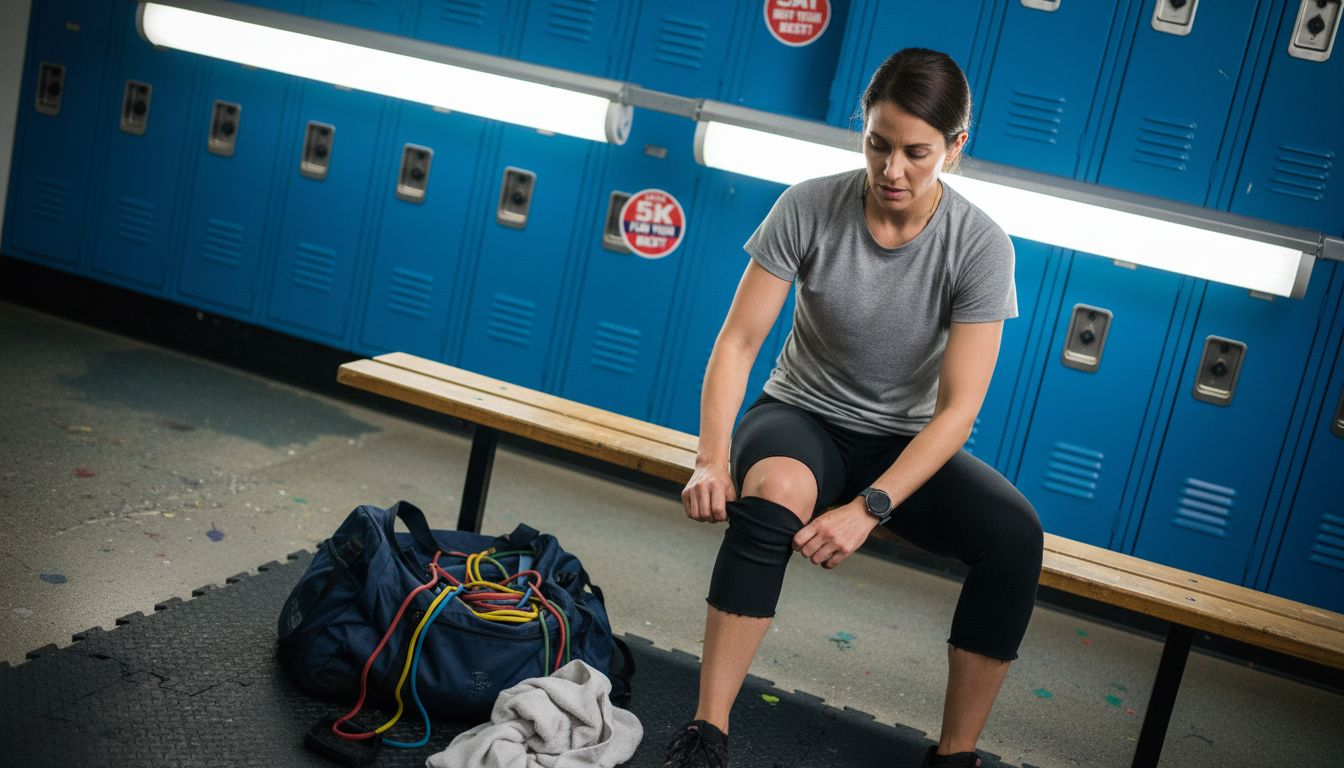
Perfecting the fit of your knee support is a nuanced process that directly impacts your athletic performance and injury prevention. The right knee support should feel like a second skin – supportive yet unrestrictive, providing protection without compromising your natural range of motion.
Biomechanical factors influencing knee support design play a critical role in achieving optimal comfort and functionality. When fitting your knee support, focus on these essential fitting strategies:
- Precise measurements – Use exact leg circumference measurements at key points
- Dynamic testing – Evaluate support during actual athletic movements
- Adjustability features – Ensure multiple tension and compression points
- Material flexibility – Select breathable fabrics that move with your body
The fitting process requires careful attention to multiple anatomical considerations. Proper alignment means checking that the knee support’s central padding corresponds exactly with your patella, providing targeted stabilization without creating pressure points. Look for supports with strategic ergonomic design that follows your leg’s natural contours, preventing bunching or sliding during intense athletic activities.
Consider your support as a performance tool, not just a protective accessory. The ideal knee support should enhance your biomechanical efficiency, redistributing muscular load and providing subtle proprioceptive feedback that improves your overall movement patterns. High-quality supports integrate seamlessly with your body’s natural mechanics.
Comfort in knee supports is not about softness, but about intelligent design that matches your unique physiological requirements.
Pro tip: Always perform a comprehensive range-of-motion test while wearing your knee support, ensuring it provides stability without restricting your natural athletic movements.
Step 4: Apply Recovery Devices for Enhanced Healing
Navigating knee injury recovery requires strategic use of advanced therapeutic devices that accelerate healing and restore joint functionality. The right recovery approach can dramatically reduce downtime and prevent long-term complications from athletic injuries.
Rehabilitative knee braces and recovery protocols play a critical role in tissue stabilization and progressive healing. When applying recovery devices, focus on these essential strategies:
- Targeted therapy – Select devices matching specific injury type
- Progressive loading – Gradually increase device intensity and duration
- Inflammation management – Utilize temperature-based recovery technologies
- Biomechanical support – Choose devices that promote natural healing mechanics
Recovery devices are not one-size-fits-all solutions. Precision application means understanding each device’s specific function and matching it to your unique healing stage. Advanced recovery tools like pneumatic compression sleeves, infrared heat wraps, and vibration therapy devices can significantly accelerate tissue repair by improving blood circulation, reducing inflammation, and promoting cellular regeneration.
Your recovery journey should be dynamic and responsive. High-quality recovery devices act as intelligent rehabilitation partners, providing targeted support that adapts to your body’s changing needs. The goal is not just healing, but returning to peak athletic performance with enhanced resilience.
Below is a comparison of recovery devices used in knee injury management:
| Device Type | Main Benefit | Ideal Use Scenario |
|---|---|---|
| Compression Sleeve | Reduces swelling, improves circulation | Early post-injury phase |
| Infrared Heat Wrap | Promotes tissue repair, relieves pain | During recovery sessions |
| Vibration Therapy Device | Enhances mobility, stimulates healing | Rehabilitation phase |
| Rehabilitative Knee Brace | Stabilizes joint, prevents re-injury | Return to training stage |
Recovery is a strategic process, not just a passive waiting period.
Pro tip: Consult a sports physiotherapist to develop a personalized recovery device protocol that matches your specific injury profile and athletic goals.
Step 5: Verify Effectiveness Through Pain-Free Movement
Validating your knee protection strategy requires a systematic approach that goes beyond initial comfort, focusing on sustained pain-free performance during athletic activities. The ultimate test of any knee protection solution is its ability to support your body’s natural movement without introducing new discomfort or limitations.
Multiple exercise modalities effectively reduce knee pain and provide critical insights into your recovery progress. When verifying the effectiveness of your knee protection approach, implement these comprehensive assessment strategies:
- Range of motion testing – Evaluate full joint flexibility without pain
- Progressive loading assessment – Gradually increase movement intensity
- Symmetry comparison – Compare performance between injured and uninjured sides
- Functional movement screening – Test complex athletic movements
Effective verification requires more than passive observation. Dynamic performance evaluation means actively challenging your knee through sport-specific movements that simulate real-world athletic demands. Pay close attention to subtle changes in movement quality, muscular engagement, and overall joint stability during these assessments.
Your pain-free movement verification should be a continuous, evolving process. High-quality knee protection isn’t just about preventing immediate injury – it’s about restoring confidence in your body’s natural biomechanical capabilities. Each successful movement becomes a milestone in your rehabilitation journey.
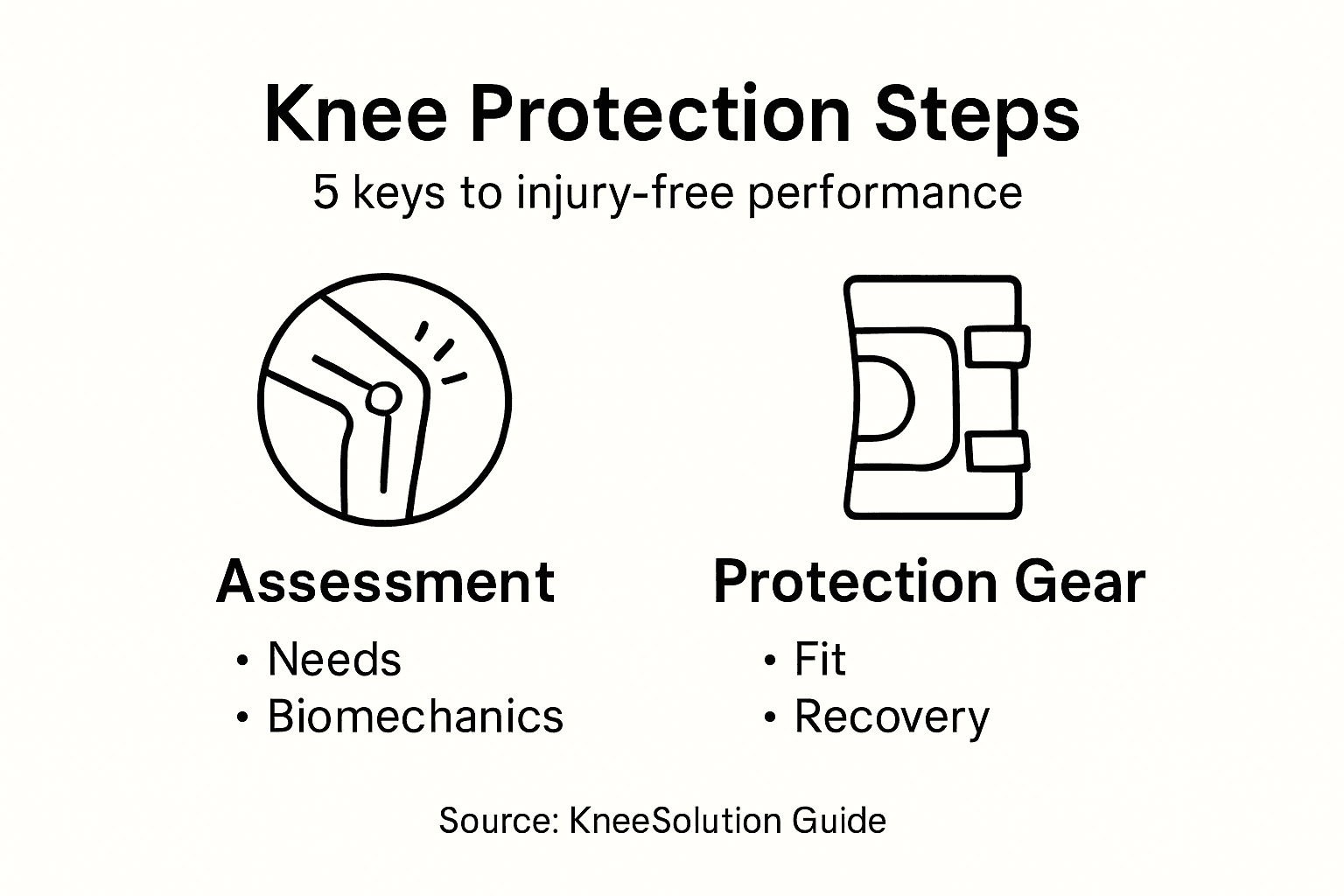
Here is a summary of key steps in the knee protection process for athletes:
| Step | Main Goal | Professional Involvement |
|---|---|---|
| Assessment | Discover individual risk factors | Biomechanist, physiotherapist |
| Gear Selection | Choose gear tailored to needs | Retailer, sports expert |
| Optimal Fit | Achieve comfort and support | Fitter or therapist |
| Recovery Devices | Accelerate healing and function | Rehabilitation specialist |
| Effectiveness Review | Ensure pain-free athletic movement | Ongoing self-assessment |
Pain-free movement is not the absence of discomfort, but the presence of confident, unrestricted athletic performance.
Pro tip: Document your movement assessments with video recordings to track subtle improvements and maintain an objective record of your recovery progress.
Unlock Your Potential With Professional Knee Protection
The journey to injury-free athletic performance starts with understanding your unique knee protection needs and choosing gear that supports your individual biomechanics. From precise fitting to advanced recovery solutions, addressing pain points like joint instability, inflammation, and restricted movement is essential to maintain confidence and peak performance. Specialized terms from the guide, such as compression technology, lateral stabilizers, and biomechanical fit, highlight the importance of tailored support that moves with your body without limiting natural motion.
At KneeSolution, we offer a curated selection of Knee Pads & Braces designed to provide the perfect balance of stability and comfort for sustained protection. Complement your recovery with our innovative Knee Recovery Devices that accelerate healing using heat, cold, and vibration therapies proven to reduce inflammation and restore mobility. Our range of Leg Protection Accessories further supports your lower limbs during training and rehabilitation, helping you stay proactive in injury prevention.
Take charge of your knee health today and experience professional-grade solutions trusted by athletes and everyday active individuals.
Explore our comprehensive offerings at KneeSolution to customize your protection and recovery strategy. Don’t wait for pain to slow you down – start building your foundation for pain-free, confident movement now.
Frequently Asked Questions
How can I assess my individual knee protection needs?
To assess your individual knee protection needs, conduct a comprehensive evaluation that includes your physical anatomy, training history, sport-specific demands, and biomechanical screening. Schedule a session with a sports physiotherapist or biomechanics expert to perform detailed diagnostic screenings that identify any potential vulnerabilities in your knees.
What factors should I consider when selecting knee protection gear?
When selecting knee protection gear, consider the material composition, stability features, sport-specific design, and biomechanical fit of the gear. Ensure that the knee gear you choose offers adjustability and compression technology to enhance both support and mobility, which can improve performance.
How do I ensure the knee support fits correctly for optimal performance?
To ensure the knee support fits correctly, take precise measurements of your leg circumference and perform dynamic testing while moving. Always check that the support aligns with crucial anatomical points, such as the patella, to provide targeted stability without pressure points or restrictions.
What recovery devices are beneficial for enhancing knee healing?
Recovery devices like compression sleeves, infrared heat wraps, and vibration therapy devices are effective for enhancing the healing process of knee injuries. Choose devices that match your specific injury type and gradually increase their intensity during recovery to support natural healing mechanics.
How can I verify the effectiveness of my knee protection strategy?
To verify the effectiveness of your knee protection strategy, perform range of motion testing to evaluate joint flexibility and engage in functional movement screenings that mimic your athletic activities. Continuously assess your performance to ensure that you are achieving pain-free movement without discomfort or limitations in your range of motion.
Recommended
- Why Protecting Your Thigh, Calf, and Achilles Tendon is Essential for Healthy Knees – KneeSolution
- Home 2 – KneeSolution
- How to Choose the Best Knee pad for Your Needs in 2025 – KneeSolution
- KneeSolution – Sports & Orthopedic Knee Braces | Knee Protection and Recovery – KneeSolution
- Collagen for Athletes Explained: Recovery, Joints, and Results
- Returning to Sport After Injury: A Guide to Your Mental Comeback
