
Blog
How to Apply Knee Compression Sleeve for Optimal Support

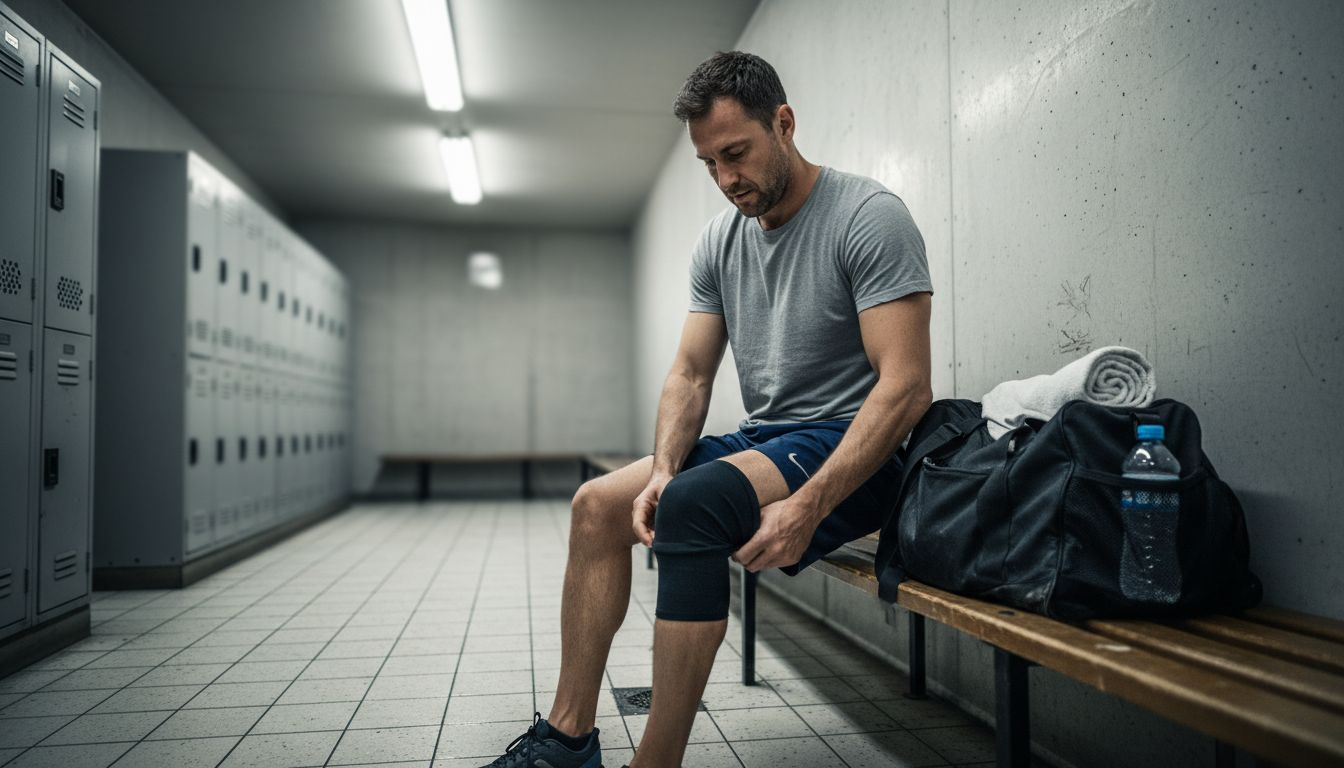
Missing a training session due to knee discomfort can set back even the most dedicated runner. Whether you’re gearing up for a French marathon or simply logging daily miles, finding the right compression sleeve can make the difference between injury and progress. With guidance drawn from medical sources on assessment, sizing, and application, this article shows you how to achieve a proper knee preparation and sleeve fit for consistent support and pain reduction throughout your running journey.
Table of Contents
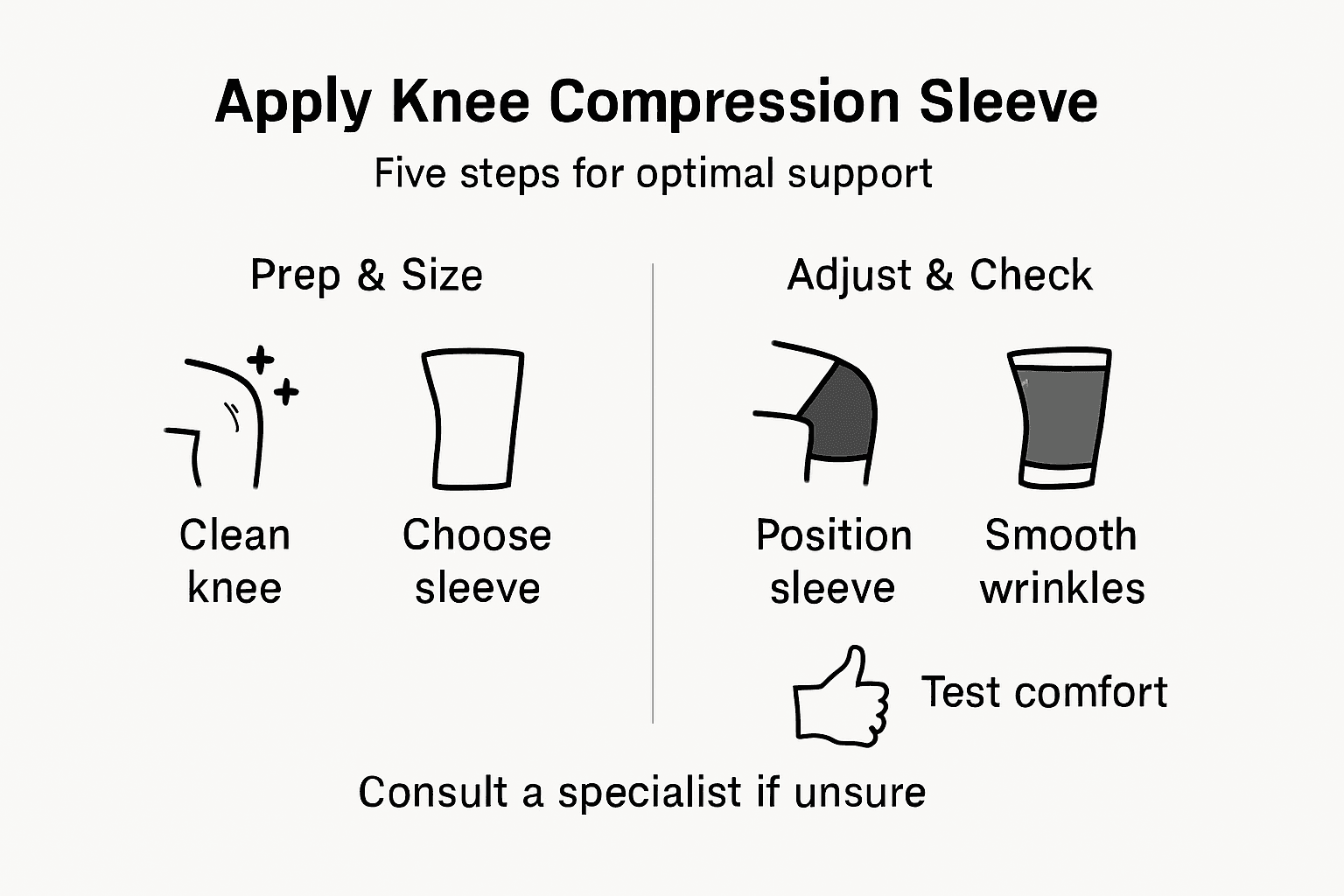
- Step 1: Prepare Your Knee And Sleeve
- Step 2: Select The Correct Sleeve Size
- Step 3: Position The Compression Sleeve Properly
- Step 4: Smooth Out Wrinkles For Even Pressure
- Step 5: Check Fit And Comfort During Activity
Quick Summary
| Key Point | Explanation |
|---|---|
| 1. Assess Knee Condition First | Thoroughly check for injuries, tenderness, or swelling before applying the sleeve to ensure proper fit and support. |
| 2. Select the Right Sleeve Size | Measure accurately for knee circumference while considering swelling to avoid discomfort and ensure effective compression. |
| 3. Position the Sleeve Correctly | Start from the ankle and pull up evenly, ensuring the sleeve covers the knee without twisting for maximum stability. |
| 4. Smooth Out Any Wrinkles | Eliminate creases by adjusting fabric carefully to maintain even compression and prevent skin irritation during activities. |
| 5. Monitor Fit During Activity | Regularly check for any signs of discomfort or improper fit while exercising to ensure the sleeve remains effective and comfortable. |
Step 1: Prepare Your Knee and Sleeve
Preparing your knee and compression sleeve correctly sets the foundation for optimal support and comfort during application. This crucial initial step ensures proper fit, protection, and potential pain relief.
Before putting on your compression sleeve, you’ll want to carefully assess your knee’s condition and create an ideal surface for application. Start by cleaning and drying the knee area thoroughly. Check for any existing injuries, swelling, or tenderness – proper knee assessment techniques recommend examining the following:
- Presence of warmth around the knee joint
- Areas of visible swelling or bruising
- Range of motion limitations
- Specific points of pain or tenderness
If you’ve recently experienced an injury, consider following the RICE method to prepare your knee:
- Rest the injured knee
- Apply ice for 10-20 minutes every 3 hours
- Use compression to manage swelling
- Elevate the knee above heart level
Ensure your compression sleeve is clean, free from tears, and matches your specific knee measurements. Gently stretch the material to check for any weak points or potential damage before application.
Pro Tip: Always inspect your compression sleeve for signs of wear and replace it if you notice any thinning fabric, loose stitching, or reduced elastic support.
Step 2: Select the Correct Sleeve Size
Choosing the right compression sleeve size is critical for ensuring maximum support, comfort, and effectiveness during athletic performance or recovery. A well-fitted sleeve can make all the difference in your knee’s protection and overall comfort.
To determine the perfect fit, you’ll need to take precise measurements of your leg. Accurate sizing techniques are essential for finding a sleeve that provides optimal compression without restricting circulation. Follow these key steps:
- Measure the circumference of your knee at its widest point
- Take measurements while standing with your leg relaxed
- Use a flexible measuring tape for the most accurate results
- Measure both legs, as size can vary slightly
The sleeve should fit snugly but not feel uncomfortably tight or restrict your movement.
When selecting your compression sleeve, consider these important factors:
Here is a quick summary of factors that influence compression sleeve sizing:
| Sizing Factor | Why It Matters | Impact if Incorrect |
|---|---|---|
| Knee Circumference | Ensures accurate fit | Too tight or too loose |
| Measurement Position | Prevents mis-sizing | Poor compression effect |
| Swelling Consideration | Allows for size fluctuations | Risk of restricted blood flow |
| Activity Type | Matches support to performance | Ineffective protection |
- Check the manufacturer’s specific sizing chart
- Account for any swelling or potential fluctuations in leg size
- Verify the sleeve’s material flexibility
- Consider your primary activity (running, recovery, sports)
Compression garment guidelines recommend ensuring the sleeve applies firm but comfortable pressure. If you’re between sizes, it’s typically better to size up to avoid circulation restrictions.
Pro Tip: Consult with a healthcare professional if you have any uncertainty about sizing, especially if you have existing knee conditions or recent injuries.
Step 3: Position the Compression Sleeve Properly
Positioning your compression sleeve correctly is crucial for maximizing its support, comfort, and effectiveness during athletic performance or recovery. A well-placed sleeve can make a significant difference in joint stability and overall protection.
Knee sleeve application techniques require careful attention to ensure proper alignment and coverage. Follow these essential steps for optimal positioning:
- Start with the sleeve bunched up at your ankle
- Slowly pull the sleeve up, evenly distributing the material
- Ensure the sleeve covers the entire knee joint
- Smooth out any wrinkles or bunched fabric
The compression sleeve should sit centered on your knee without twisting or rolling.
When positioning your sleeve, pay close attention to these critical details:
- Align the sleeve symmetrically around your knee
- Check that the top and bottom edges are smooth
- Verify no fabric is bunched behind the knee
- Test your range of motion to confirm comfort
For athletes and active individuals, weightlifting knee sleeve positioning is especially important. The sleeve should provide firm support without restricting movement, creating a stable environment for your joint during intense activities.
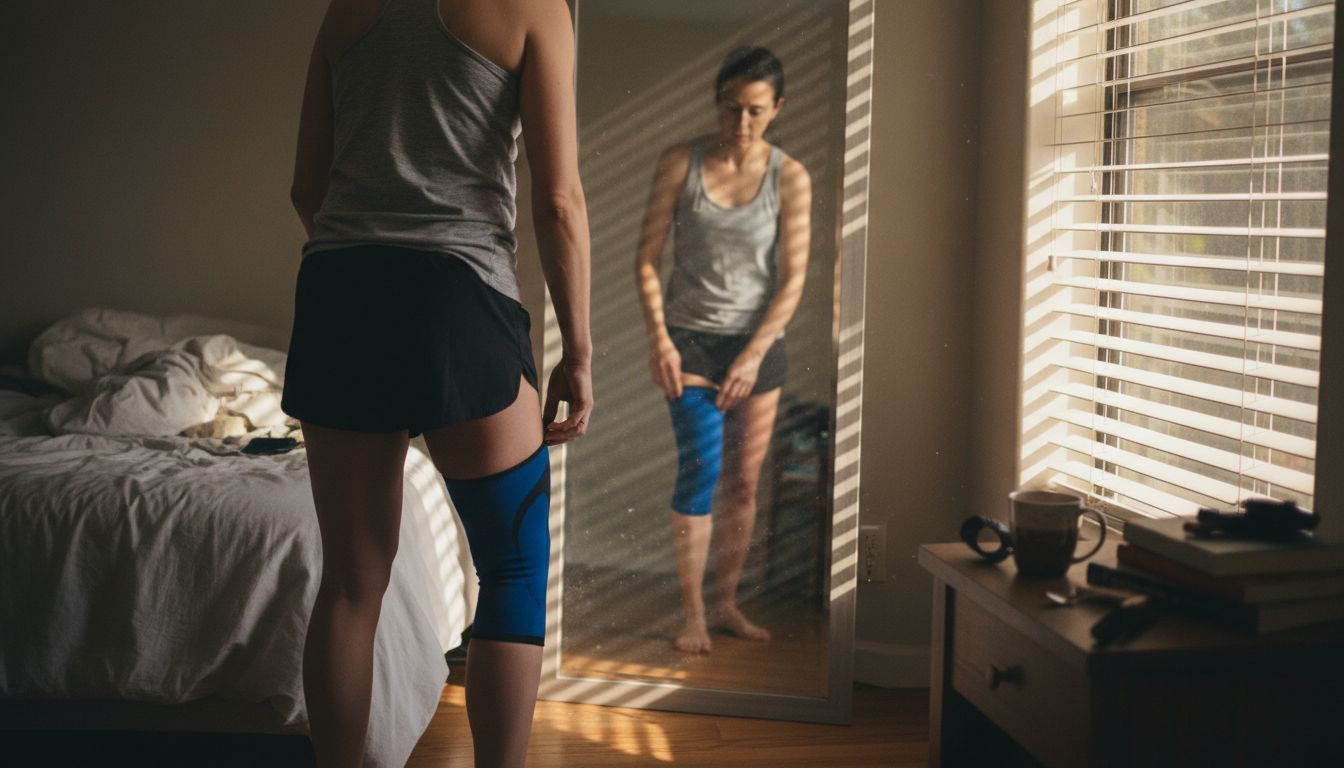
Pro Tip: Stand in front of a mirror during application to ensure the sleeve is centered and positioned perfectly, catching any alignment issues before your workout.
Step 4: Smooth Out Wrinkles for Even Pressure
Achieving uniform compression requires meticulous attention to detail when applying your knee sleeve. Eliminating wrinkles and creases is essential for maintaining consistent support and preventing potential skin irritation during your athletic activities.
Compression garment fitting techniques emphasize the importance of smooth, even fabric distribution. Follow these strategic steps to ensure optimal sleeve positioning:
- Use both hands to spread the sleeve evenly
- Pull gently from top and bottom edges
- Stretch the material carefully to remove bunching
- Check for any remaining creases or folds
Uneven compression can compromise the sleeve’s effectiveness and potentially cause discomfort.
To eliminate wrinkles and maintain consistent pressure, implement these precise techniques:
- Work methodically from ankle to knee
- Smooth fabric with flat palms
- Adjust sleeve incrementally
- Reposition if any irregularities remain
For athletes and active individuals, compression therapy principles require careful attention to fabric positioning. Wrinkles can create pressure points that reduce the sleeve’s supportive capabilities and potentially cause skin issues.
Pro Tip: When smoothing your sleeve, use the heel of your hand to create a gentle, even pressure that eliminates subtle wrinkles without overstretching the material.
Step 5: Check Fit and Comfort During Activity
Ensuring your knee compression sleeve remains comfortable and functional throughout your workout requires ongoing attention and periodic assessment. Your sleeve should enhance performance without causing discomfort or restricting movement.
Knee sleeve monitoring techniques are crucial for maintaining optimal support during physical activities. Pay close attention to how the sleeve feels and performs while you move:
- Check for consistent compression
- Monitor skin sensation around the sleeve
- Assess range of motion
- Look for any unexpected movement or slippage
A properly fitted compression sleeve should feel like a second skin – supportive yet unobtrusive.
During your activity, be aware of these critical comfort indicators:
- Evaluate sleeve stability while exercising
- Notice any tingling or numbness
- Check for skin discoloration
- Assess overall joint comfort and mobility
Physical warning signs that indicate an improper fit include:
- Persistent skin indentations
- Reduced circulation
- Unexpected sleeve migration
- Increased joint discomfort
If you experience any of these symptoms, pause your activity and readjust the sleeve or consider consulting a professional about alternative sizing.
Compare these common compression sleeve issues and recommended actions:
| Symptom | Possible Cause | Recommended Response |
|---|---|---|
| Tingling or Numbness | Sleeve too tight | Remove and re-fit sleeve |
| Persistent Indentations | Excessive pressure | Size up to a larger sleeve |
| Sleeve Migration | Incorrect sizing or alignment | Reposition or try new size |
| Skin Discoloration | Circulation restriction | Pause activity and consult specialist |
Pro Tip: Perform a quick “mobility test” by doing 5-10 squats or lunges immediately after putting on the sleeve to quickly assess its comfort and fit.
Enhance Your Knee Support with Professional-Grade Compression Solutions
Applying a knee compression sleeve correctly is key for effective pain relief and joint stabilization but choosing the right product is just as crucial. If you struggle with finding a sleeve that fits perfectly without slipping or restricting circulation, or if you want to optimize your recovery and protect your knees during intense activities, KneeSolution offers expert solutions designed precisely for these challenges. Our range of Knee Pads & Braces combines adjustable straps, non-slip designs, and medical-grade compression to provide the support you need while ensuring comfort and mobility.
Take control of your knee health today. Visit KneeSolution to explore professional-grade knee protection and recovery products trusted by athletes and active individuals alike. Experience superior compression technology that aligns with expert recommendations on fit, position, and comfort described in this guide. Don’t wait for discomfort or injury to slow you down. Shop now and support your knees with confidence.
Frequently Asked Questions
How do I prepare my knee before applying a compression sleeve?
To prepare your knee, start by cleaning and drying the area thoroughly. Examine for any injuries or swelling, and consider applying the RICE method—rest, ice, compression, and elevation—to minimize discomfort before using the sleeve.
What size knee compression sleeve should I choose?
Choose a knee compression sleeve that fits snugly but isn’t overly tight. Measure the circumference of your knee at its widest point and check the manufacturer’s sizing chart to ensure you select the correct size for optimal support.
How should I position the compression sleeve on my knee?
Position the compression sleeve starting at your ankle, pulling it up evenly to cover the knee joint without twisting. Ensure the sleeve is centered and smooth, checking that it doesn’t bunch or roll during application for the best fit.
What steps can I take to smooth out wrinkles in my compression sleeve?
To smooth out wrinkles, use both hands to pull the fabric gently from the top and bottom edges while distributing it evenly. Remove any remaining creases to maintain consistent compression and prevent discomfort during your activities.
How can I check if my compression sleeve fits properly during activity?
During activity, evaluate the fit of your compression sleeve by checking for consistent compression and your range of motion. If you experience tingling, numbness, or skin discoloration, adjust the sleeve or consider trying a different size to ensure optimal comfort.
What should I do if my compression sleeve causes discomfort while exercising?
If your compression sleeve causes discomfort, stop your activity immediately. Reassess the positioning or size of the sleeve and ensure it’s not too tight; you may need to try a larger size for a better fit.
Recommended
- Unlocking the Benefits of Compression Sleeves for Athletes and Rehab Warriors – KneeSolution
- Compression Sleeves: An Essential Ally for Your Rehabilitation – KneeSolution
- How to Reduce Knee Pain Without Medication: Natural Remedies That Work – Lunix
- 15 Home Remedies for Knee Pain Relief – Home Remedies
- How We Treat: Knee Pain
