


Blog
Knee Support Fitting Guide for Effective Pain Relief

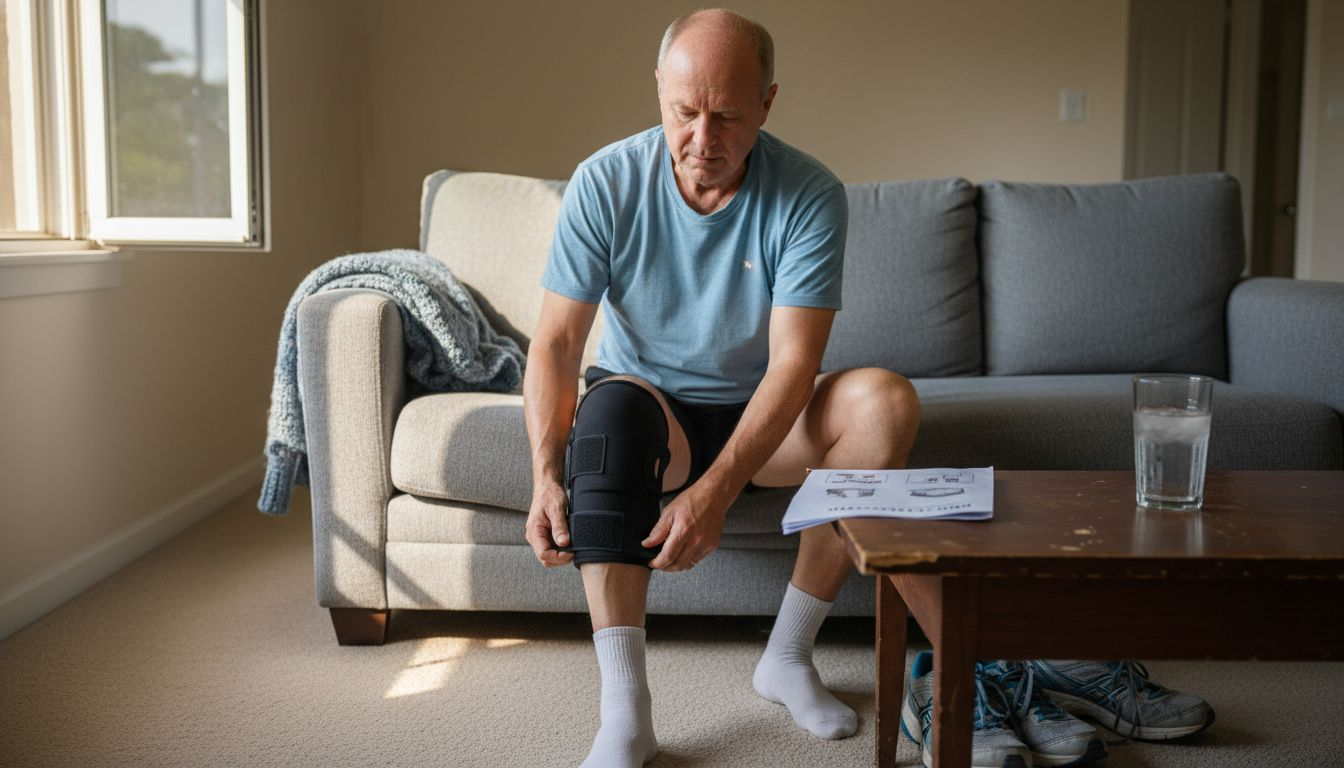
For every runner zigzagging through the streets of Paris or pushing through another marathon training session, knee pain can threaten even the most dedicated routines. Consistent movement takes its toll, making reliable protection and recovery a top concern for athletes aiming to stay strong. Discover how the right knee support can deliver targeted comfort, help prevent injury, and keep you performing at your best from the first stride to the last mile. Bold choices begin with understanding your body’s unique needs.
Table of Contents
- Step 1: Select The Right Knee Support Product
- Step 2: Measure Your Knee For Accurate Sizing
- Step 3: Position The Support For Optimal Placement
- Step 4: Adjust Straps And Compression Levels Securely
- Step 5: Test Fit And Comfort For Daily Use
Quick Summary
| Key Point | Explanation |
|---|---|
| 1. Identify Your Knee Support Needs | Understand your pain, activity level, and specific requirements to select the right knee support product effectively. |
| 2. Measure for Accurate Fit | Use precise measuring techniques to ensure your knee support fits comfortably and provides adequate protection. |
| 3. Position Support for Effectiveness | Align the knee support correctly over the kneecap to maximize therapeutic benefits and stability. |
| 4. Adjust Straps for Comfort | Securely adjust straps to create a snug fit that avoids pinching while ensuring proper circulation. |
| 5. Test for Daily Wearability | Assess comfort and support through various movements to confirm the knee support is suitable for your daily activities. |
Step 1: Select the Right Knee Support Product
Choosing the perfect knee support product requires understanding your specific physical needs and activity level. The goal is to find a solution that provides targeted support, reduces pain, and prevents potential injuries. Comprehensive knee brace guides recommend analyzing three critical factors before making your selection: your current physical condition, primary athletic activities, and specific pain or mobility challenges.
Start by identifying your primary requirement. Are you seeking relief from runner’s knee, managing arthritis symptoms, recovering from surgery, or looking to prevent potential sports injuries? Different knee supports offer specialized features like compression levels, stabilization mechanisms, and material compositions designed to address specific conditions. For runners and marathon athletes, look for lightweight braces with breathable fabrics and adjustable straps that provide dynamic support without restricting natural movement. Athletes recovering from injuries should prioritize braces with enhanced lateral support and cushioning to protect vulnerable joint areas.
Assess your body’s unique biomechanics by measuring your knee circumference precisely. Most professional knee supports come with detailed sizing charts that match measurements to specific product recommendations. Pay attention to material flexibility, moisture wicking capabilities, and comfort during extended wear. Copper infused compression sleeves work well for those needing continuous mild support, while rigid hinged braces suit individuals requiring maximum joint stabilization.
Pro Tip: Always consult a sports medicine professional or physiotherapist to validate your knee support selection and ensure optimal healing and performance.
Here is a comparison of common types of knee support and their best-use scenarios:
| Support Type | Best For | Key Benefit |
|---|---|---|
| Compression Sleeve | Mild pain, daily wear | Enhances circulation |
| Hinged Brace | Post-injury stabilization | Maximum lateral support |
| Wraparound/Strap Brace | Adjustable compression | Easy fit adjustments |
| Closed Patella Sleeve | Overall knee warmth | Helps with swelling |
| Open Patella Brace | Patellar tracking issues | Relieves kneecap pressure |
Step 2: Measure Your Knee for Accurate Sizing
Accurate knee measurement is crucial for selecting a knee support that provides optimal comfort and protection. Precise measurement techniques will ensure you choose a brace that fits perfectly and supports your unique biomechanical needs.
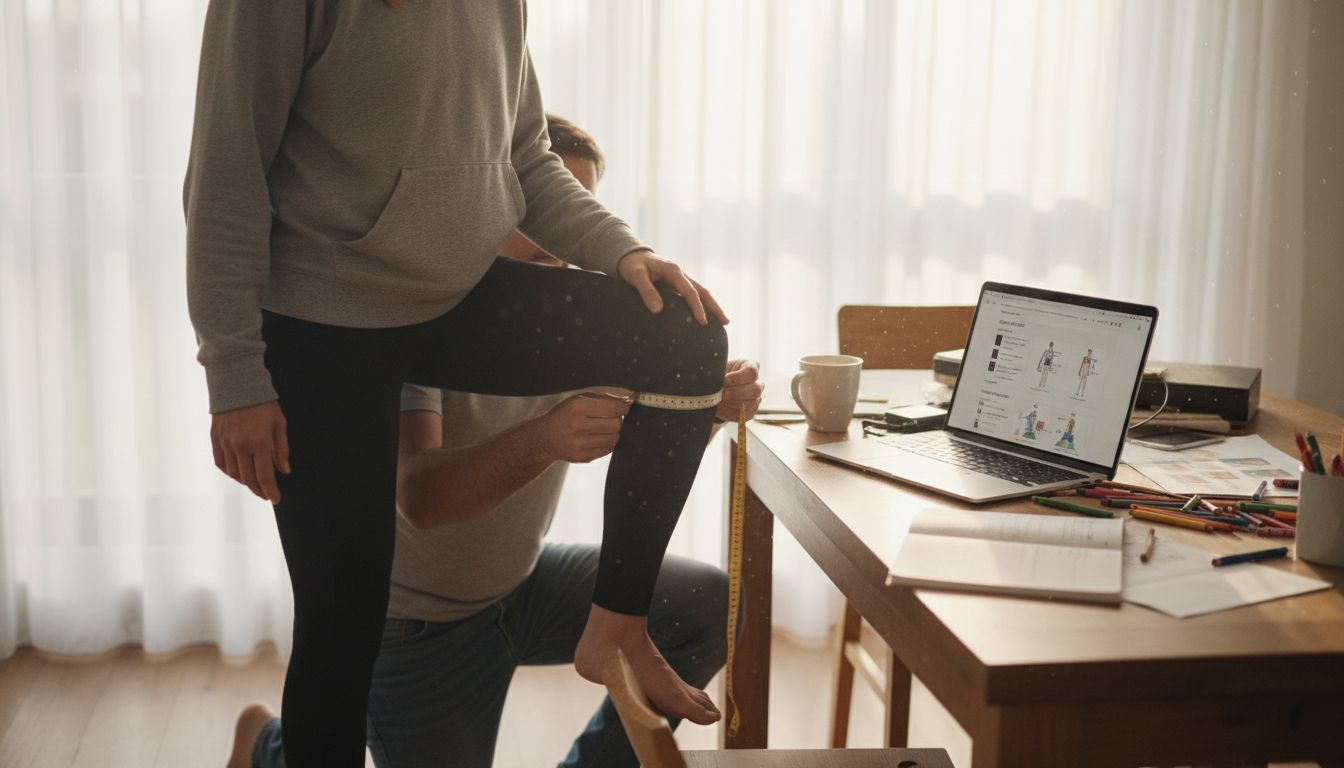
To measure your knee circumference, you will need a flexible measuring tape and a partner to help ensure accuracy. Stand upright with your leg slightly bent, creating a natural position that represents your typical movement pattern. Wrap the measuring tape around the center of your kneecap horizontally, keeping the tape level and snug but not tight. Take multiple measurements to confirm consistency, and record the circumference in both inches and centimeters to match various sizing charts.
When interpreting your measurements, remember that different knee support brands may have slightly varied sizing recommendations. If your measurement falls between two sizes, experts recommend choosing the larger size to ensure comfortable movement and adequate support. Pay close attention to the specific sizing guidelines provided by the manufacturer, as some brands design their supports with unique compression technologies and stretch characteristics that might affect the ideal fit.
Pro Tip: Measure your knee at the end of the day when slight swelling is most likely, ensuring your knee support will accommodate natural body changes throughout daily activities.
Use this reference chart to interpret your knee measurement results when selecting a brace:
| Circumference Range (inches) | Common Size Label | Typical Wearer |
|---|---|---|
| 12 – 14 | Small | Petite adults and teens |
| 14 – 16 | Medium | Most average adults |
| 16 – 18 | Large | Adults with bigger knees |
| 18 – 20 | X-Large | Athletes, larger builds |
Step 3: Position the Support for Optimal Placement
Positioning your knee support correctly is essential for maximizing its therapeutic benefits and ensuring proper joint protection. Precise knee brace alignment requires careful attention to anatomical positioning and strategic strap placement.
Begin by preparing your leg in a slightly bent position approximately 20 to 30 degrees. This natural stance allows for the most accurate brace placement, mimicking your body’s typical movement pattern. Align the brace’s central opening directly over your kneecap, ensuring that any hinged components match the knee’s natural anatomical axis. The brace should be centered on the femoral epicondyles, with openings and structural elements symmetrically positioned to provide balanced support. Secure the straps systematically starting from the bottom and working upward, maintaining even tension that supports the joint without creating uncomfortable pressure points.
Check the brace’s positioning by performing gentle movements. The support should remain stable without sliding or rotating, allowing natural knee flexion while providing consistent compression. Pay special attention to preventing vertical movement or “pistoning” that can reduce the brace’s effectiveness. Different knee supports may have unique design features, so always reference the manufacturer’s specific fitting instructions to guarantee optimal performance.
Pro Tip: Practice putting on your knee support in front of a mirror to visually confirm proper alignment and symmetrical positioning.
Step 4: Adjust Straps and Compression Levels Securely
Mastering the art of knee support strap adjustment is crucial for achieving optimal therapeutic benefits and maintaining comfortable joint protection. Correct knee brace strap techniques require a delicate balance between secure fastening and maintaining proper circulation.
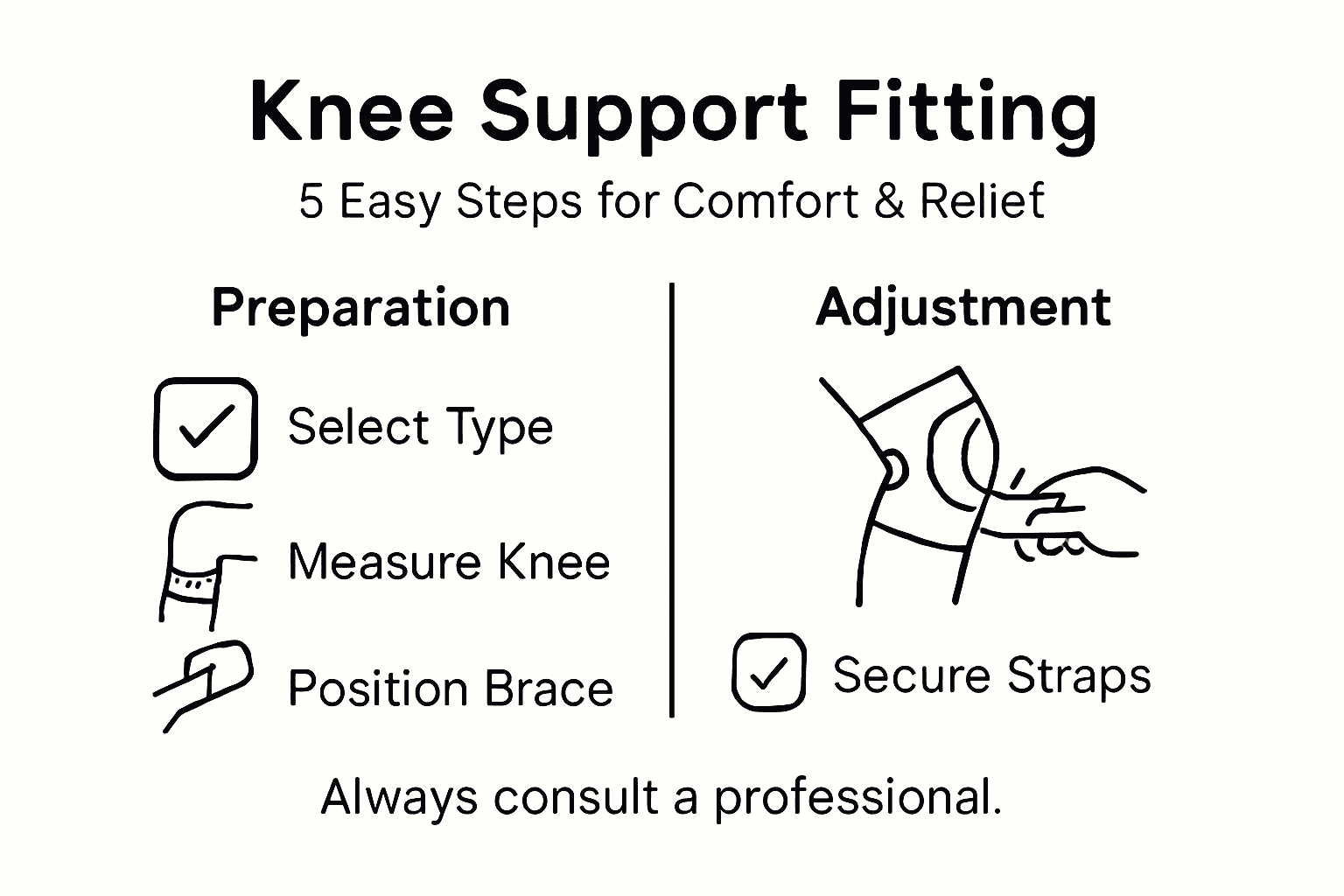
Begin by fastening the straps closest to the knee joint first, creating a foundational anchor point for the brace. Apply consistent, firm pressure that feels snug without creating uncomfortable pinching or restricting blood flow. The goal is to achieve a compression level that supports your knee without causing skin irritation or discomfort. Use your fingers to check the tightness by ensuring you can slide one finger underneath the strap comfortably. For compression sleeves, start at the bottom and work upward, smoothing out any wrinkles to ensure even pressure distribution across the knee area.
Dynamic adjustments are key to maintaining effective support throughout your activities. Periodically check and readjust the straps during movement, especially during sports or extended wear. Different activities may require slight tension modifications to accommodate changing joint mechanics. Pay attention to how the brace feels during various movements pay special attention to any signs of slipping, pinching, or uneven compression that might indicate the need for readjustment.
Pro Tip: Wear the knee support for a few minutes before final adjustments to allow the material to settle and your body to adapt to the initial compression.
Step 5: Test Fit and Comfort for Daily Use
Validating your knee support requires a comprehensive assessment of its performance across different activities and movement patterns. Knee brace comfort criteria involve evaluating materials, breathability, stability, and overall ergonomic design to ensure optimal support throughout daily tasks.
Conduct a thorough comfort test by performing a range of movements that simulate your typical daily activities. Walk, climb stairs, sit and stand, and perform gentle knee flexion exercises to assess how the brace responds to different motions. Pay attention to key comfort indicators such as skin irritation, pressure points, breathability, and range of motion. The ideal knee support should feel like a second skin maintaining consistent support without causing numbness, pinching, or excessive sweating. Check for any slipping or rotating during movement, which could indicate an improper fit or need for strap readjustment.
Evaluate the brace’s long term wearability by monitoring how it feels during extended use. Some materials might initially feel comfortable but become uncomfortable after several hours. Track your skin’s response, noting any redness, chafing, or restricted circulation. A high quality knee support should provide sustained comfort, maintain its supportive structure, and adapt to your body’s natural movement without causing fatigue or discomfort.
Pro Tip: Wear the knee support for a full day during varied activities to get a comprehensive understanding of its real world performance and comfort level.
Discover Professional Knee Support Solutions Tailored to Your Needs
If you have been struggling to find the perfect knee support that fits well, feels comfortable, and relieves pain, KneeSolution is here to transform your recovery and daily protection. The article highlights critical steps like selecting the right brace type, accurate knee measurement, and proper strap adjustment as keys to effective pain relief and injury prevention. Our range of Knee Pads & Braces covers all these bases with professional-grade options including compression sleeves, hinged braces, and adjustable strap supports that prioritize stability and comfort.
Explore our full collection at KneeSolution and take action today to experience targeted relief from knee pain and enhanced joint support for sports, work, or everyday life. With products designed using proven therapeutic technologies and backed by a 14-day money-back guarantee, now is the perfect time to start moving pain-free. Don’t wait let us help you protect your knees with confidence and comfort.
Frequently Asked Questions
How do I choose the right knee support for my needs?
To choose the right knee support, assess your specific physical condition, activity level, and any pain or mobility challenges you face. Identify whether you need support for a condition like arthritis or if you’re recovering from an injury, and select a brace with appropriate features such as compression levels or stabilization mechanisms.
What is the correct way to measure my knee for a support brace?
Measure your knee by wrapping a flexible measuring tape around the center of your kneecap while your leg is slightly bent. Record your measurements in both inches and centimeters to find your size from the manufacturer’s sizing chart, ensuring a perfect fit.
How should I position my knee support for maximum effectiveness?
Position your knee support with the central opening directly over your kneecap and secure it while your leg is at a 20 to 30-degree bend. This allows for optimal joint protection and effective support as you move.
What should I do if my knee support feels uncomfortable?
If your knee support feels uncomfortable, check for proper fit and strap adjustment. Ensure it’s snug but not too tight to avoid pinching or restricting blood flow, and readjust the straps as needed to enhance comfort and support during movement.
How can I test the fit of my knee support before using it daily?
Perform various movements while wearing your knee support, such as walking and climbing stairs, to ensure it functions well throughout your typical activities. Look for signs of slipping, pinching, or discomfort and assess its breathability and stability to judge if it’s the right fit for extended wear.
How often should I reassess the fit of my knee support?
Reassess the fit of your knee support regularly, particularly after intense activities or prolonged use. Monitor for any changes in your knee size or comfort level, and adjust or replace the support as necessary to maintain effective pain relief.
