

Blog
Role of Thigh Compression: Boosting Athletic Performance


Pacing through long runs on Paris streets or powering up a hill in the French countryside, athletes often search for ways to keep their muscles sharp and resilient. Maintaining peak performance means not only training hard but also minimizing fatigue and reducing the risk of injuries. With targeted muscle stabilization and improved blood flow, thigh compression can make a real difference for dedicated runners and cyclists aiming to stay strong and recover faster.
Table of Contents
- What Is Thigh Compression and Its Purpose
- Main Types and Key Features Explained
- How Thigh Compression Enhances Performance
- Injury Prevention and Post-Workout Recovery
- Risks, Safety Guidelines, and Common Mistakes
Key Takeaways
| Point | Details |
|---|---|
| Thigh compression enhances athletic performance. | Graduated compression improves muscle stabilization, blood circulation, and reduces fatigue during high-intensity activities. |
| Different types of compression garments serve various purposes. | Medical-grade sleeves, performance sleeves, recovery garments, and muscle support wraps are tailored for specific needs in athletic and rehabilitation contexts. |
| Compression levels vary for optimal use. | Compression sleeve pressure ranges from 15-40 mmHg, with low, medium, and high levels suited for daily wear, athletic performance, and intense training respectively. |
| Proper usage is crucial for effectiveness and safety. | Athletes should ensure correct fit, monitor skin condition, and consult professionals to avoid risks and maximize benefits. |
What Is Thigh Compression and Its Purpose
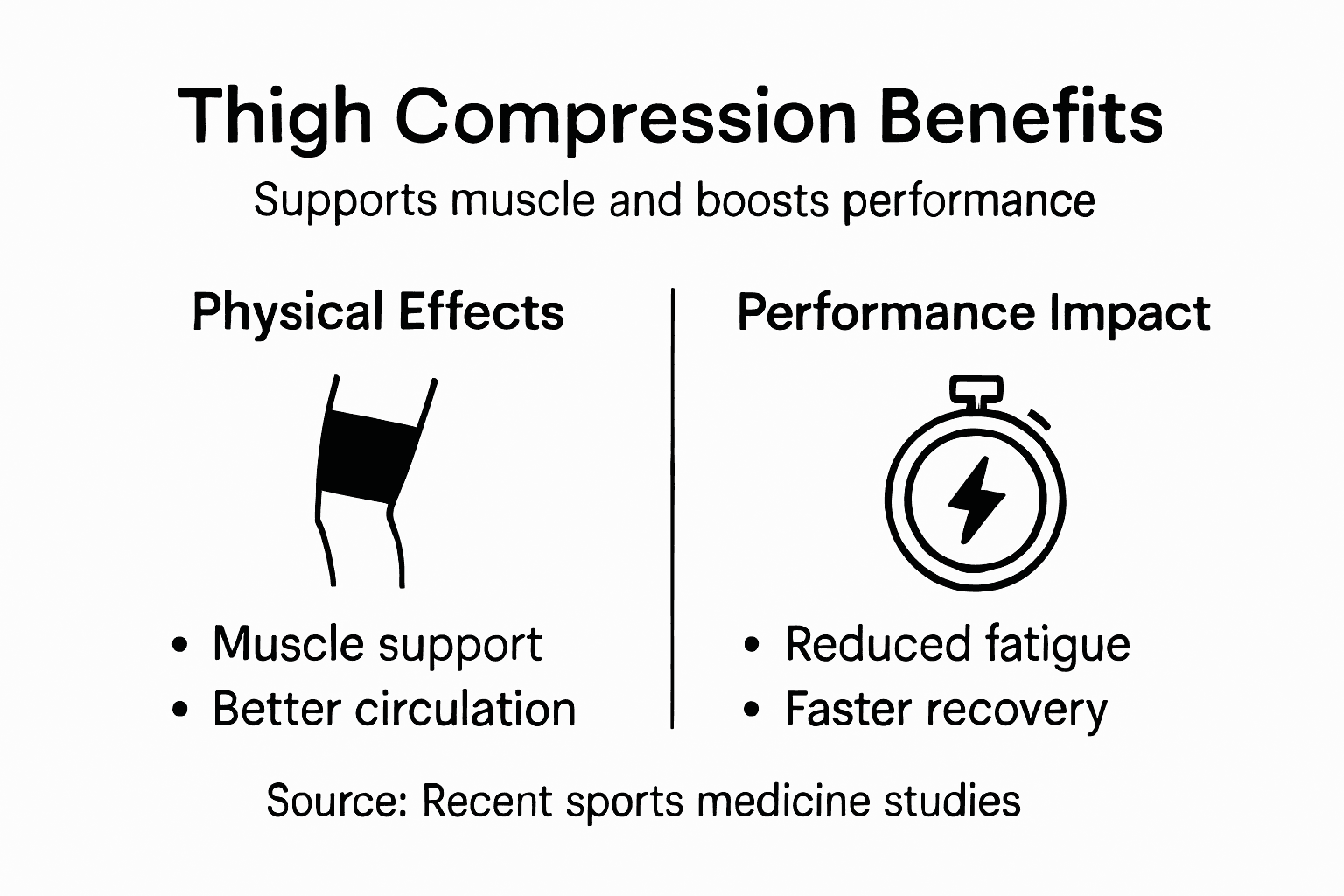
Thigh compression represents a targeted athletic performance enhancement technique designed to support muscle function and improve physiological responses during intense physical activities. By applying strategic pressure to specific muscle groups, thigh compression sleeves create a scientifically engineered environment for optimal muscular performance and recovery.
Compression technology works through a precise mechanism of applying graduated pressure along the thigh muscles. Targeted muscle stabilization occurs by reducing muscle oscillation and providing structural support during dynamic movements. The primary mechanisms include:
- Enhancing blood circulation
- Minimizing muscle vibration
- Supporting muscle groups during high-intensity activities
- Reducing potential muscle fatigue
Athletes utilize thigh compression for multiple physiological benefits. The strategic pressure helps improve oxygen delivery, decrease lactic acid buildup, and provide muscular support that can potentially reduce injury risks. Graduated compression means the sleeve applies different pressure levels – tighter at the ankle and gradually reducing pressure as it moves up the leg, which promotes more efficient blood flow.
Performance enhancement is the core purpose of thigh compression, with scientific research demonstrating its potential to support muscle function during running, cycling, and other high-intensity sports. Targeted muscle support helps athletes maintain muscle stability and potentially improve overall performance metrics.
Pro tip: Select a thigh compression sleeve that offers medical-grade graduated compression and matches your specific sport’s biomechanical requirements for maximum effectiveness.
Main Types and Key Features Explained
Thigh compression technologies offer multiple variations designed to meet diverse athletic and medical needs. Compression therapy encompasses several distinct product categories, each engineered to deliver specific performance and recovery benefits for athletes and active individuals.
Compression Categories include:
- Medical-Grade Compression Sleeves: Professionally designed with precise pressure gradients
- Athletic Performance Sleeves: Engineered for specific sports and movement patterns
- Recovery Compression Garments: Focused on post-exercise muscle rehabilitation
- Targeted Muscle Support Wraps: Designed for specific muscle group stabilization
The pressure measurement of compression sleeves is critical and typically ranges between 15-40 mmHg. This graduated pressure system ensures optimal blood circulation and muscle support. Compression levels vary based on intended use:
- Low Compression (15-20 mmHg): Ideal for mild muscle support and everyday activities
- Medium Compression (20-30 mmHg): Recommended for athletic performance and moderate muscle recovery
- High Compression (30-40 mmHg): Designed for intense athletic training and serious muscle stabilization
Modern thigh compression technologies incorporate advanced materials like breathable synthetic fabrics, moisture-wicking properties, and ergonomic designs that adapt to body movements. These features ensure athletes receive maximum support without compromising comfort or range of motion.
Below is a summary of compression levels and their ideal situations:
| Compression Level | Pressure (mmHg) | Ideal Usage Scenario | Expected Benefit |
|---|---|---|---|
| Low | 15-20 | Daily wear and mild support | General comfort, light relief |
| Medium | 20-30 | Sports and moderate activity | Enhanced endurance, muscle protection |
| High | 30-40 | Intense training and rehabilitation | Strong stabilization, injury prevention |
Here’s a comparison of main thigh compression sleeve types and their typical applications:
| Compression Type | Target User | Typical Use Case | Key Material Feature |
|---|---|---|---|
| Medical-Grade | Patients and athletes | Medical treatment and injury prevention | High-pressure, durable fabric |
| Performance Sleeve | Competitive athletes | Sport-specific support and agility | Breathable, flexible textiles |
| Recovery Garment | Active individuals | Post-exercise muscle recovery | Moisture-wicking, ergonomic design |
| Muscle Support Wrap | Targeted muscle groups | Stabilization during strenuous activity | Adjustable, stretchable material |
Pro tip: Always select compression sleeves that match your specific athletic requirements, considering pressure level, material composition, and intended activity type.
How Thigh Compression Enhances Performance
Athletic performance demands peak muscle efficiency, and muscle stabilization techniques play a crucial role in achieving optimal results. Thigh compression technology provides a scientifically engineered approach to enhancing athletic performance through multiple physiological mechanisms.
Performance Enhancement Mechanisms include:
- Reducing muscle vibration during intense activities
- Improving blood circulation and oxygen delivery
- Minimizing muscle fatigue and strain
- Supporting muscle groups during high-intensity movements
- Accelerating post-exercise recovery processes
Compression sleeves work by applying strategic pressure that helps muscles maintain optimal alignment and reduce unnecessary movement. Oxygen delivery and muscle efficiency are significantly improved through graduated compression, which creates a supportive environment for muscular performance.

The biomechanical benefits extend beyond immediate performance. By minimizing muscle oscillation and providing targeted support, compression technology helps athletes maintain more consistent power output, reduce injury risks, and potentially improve overall movement efficiency. Athletes across various disciplines – from runners to cyclists – can experience enhanced performance through these advanced compression solutions.
Pro tip: Invest in compression sleeves that offer graduated pressure and are specifically designed for your primary athletic activity to maximize performance benefits.
Injury Prevention and Post-Workout Recovery
Athletic performance requires not just intense training, but strategic recovery methods. Muscle recovery techniques play a crucial role in maintaining long-term athletic health and preventing potential injuries.
Key Recovery Benefits of thigh compression include:
- Reducing delayed onset muscle soreness (DOMS)
- Minimizing muscle inflammation
- Supporting lymphatic drainage
- Accelerating metabolic waste removal
- Preventing microtrauma to muscle fibers
Post-workout healing strategies demonstrate that compression garments create a supportive environment for muscle recovery. By applying strategic pressure, these garments help athletes maintain muscle integrity and reduce the risk of strain or overuse injuries.
The physiological mechanisms of compression work by enhancing blood circulation, supporting muscle alignment, and creating a protective environment for tissue repair. Athletes experiencing frequent muscle fatigue or those engaged in high-intensity training can significantly benefit from consistent use of compression technology, which helps mitigate recovery time and potential injury risks.
Pro tip: Integrate compression sleeves into your post-workout routine and wear them during active recovery periods to maximize muscle healing and reduce inflammation.
Risks, Safety Guidelines, and Common Mistakes
Compression technologies demand careful and informed application to ensure athlete safety and effectiveness. Compression therapy risks require understanding potential medical limitations and proper usage protocols.
Potential Risks and Contraindications include:
- Peripheral arterial disease complications
- Severe cardiac insufficiency
- Neuropathy symptoms
- Skin irritation or allergic reactions
- Potential circulation restriction
Injury prevention protocols emphasize the importance of proper compression application. Critical safety guidelines involve:
- Ensuring correct sleeve fit and size
- Monitoring skin condition during use
- Avoiding excessive pressure
- Consulting healthcare professionals for individual recommendations
- Checking for any existing medical conditions
Athletes must be particularly cautious about common mistakes that could compromise compression effectiveness. Improper application can lead to reduced blood circulation, skin damage, or ineffective muscle support. Understanding individual body mechanics and specific athletic requirements is crucial for safe and beneficial compression use.
Pro tip: Always consult a sports medicine professional to assess your individual compression needs and potential medical contraindications before integrating compression technology into your training routine.
Elevate Your Athletic Performance with Targeted Lower Limb Support
If you are seeking to boost muscular stability and enhance recovery as described in the Role of Thigh Compression article, incorporating professional-grade compression gear can make all the difference. Common challenges like muscle fatigue, delayed recovery, and injury risks demand solutions that combine comfort with scientifically backed compression technology. At KneeSolution, our Leg Protection Accessories include perfected thigh compression sleeves designed to improve circulation, reduce muscle vibration, and support your muscles through intense activity and recovery.
Experience the benefits of graduated compression tailored to your specific needs and feel the difference during training and rehabilitation. Discover how our innovative knee pads, braces, and compression products protect your joints and muscles while enhancing performance. Don’t wait until soreness or injury slows you down. Visit KneeSolution today to explore our complete range of trusted lower limb solutions and take the first step toward pain-free movement and superior athletic support.
Frequently Asked Questions
What are the main benefits of using thigh compression sleeves for athletes?
Thigh compression sleeves enhance blood circulation, minimize muscle vibration, reduce muscle fatigue, and provide structural support during intense activities, leading to improved performance and recovery.
How do I choose the right level of compression for my activities?
Select compression levels ranging from 15-20 mmHg for mild support, 20-30 mmHg for athletic performance, and 30-40 mmHg for intense training. Your choice should align with your specific needs and activity intensity.
Can thigh compression help with post-workout recovery?
Yes, thigh compression can reduce delayed onset muscle soreness (DOMS), minimize inflammation, support lymphatic drainage, and accelerate metabolic waste removal, aiding in recovery after workouts.
Are there any risks associated with using thigh compression sleeves?
Potential risks include complications for individuals with peripheral arterial disease, severe cardiac issues, and neuropathy symptoms. It’s critical to ensure proper fit, monitor skin condition, and consult with healthcare professionals if needed.
