

Blog
Step by Step Calf Support for Injury Prevention

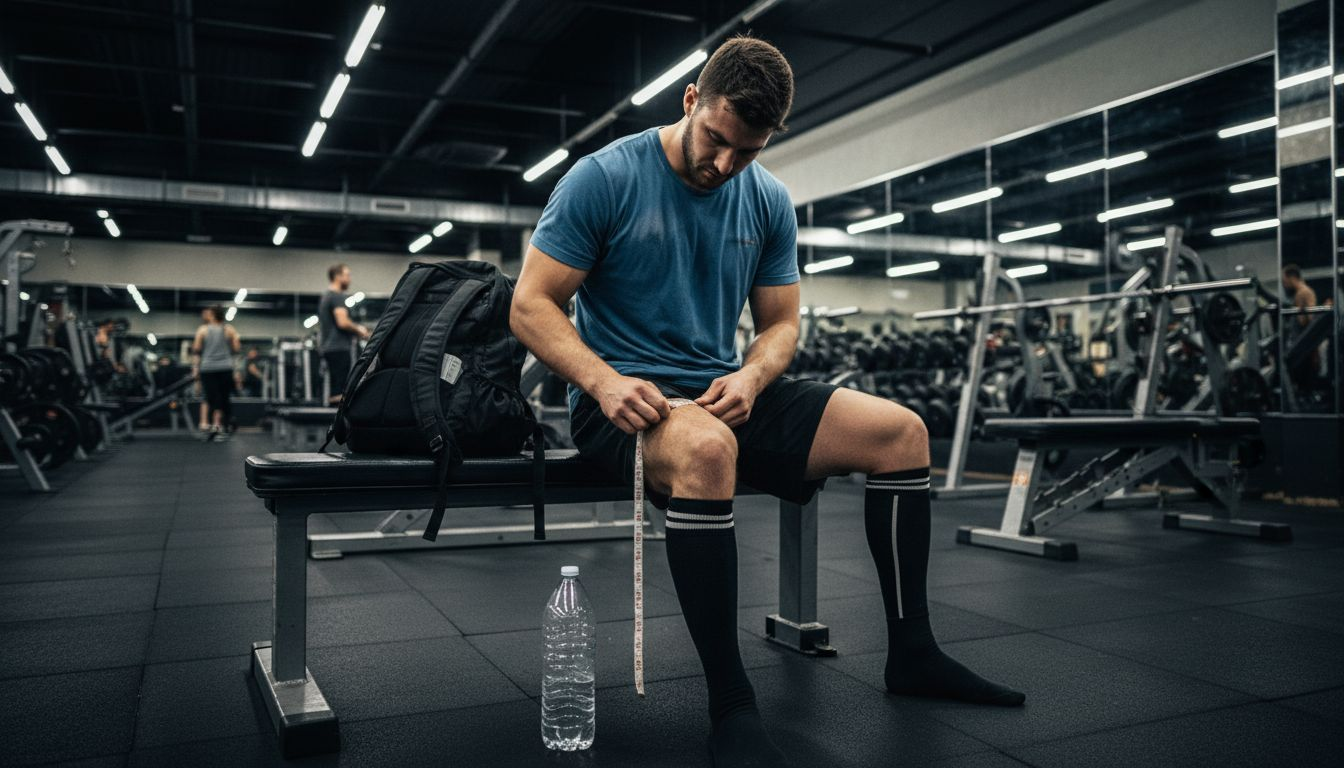
For many European runners, persistent calf discomfort can make even the smoothest training session a struggle. Achieving high performance while protecting your muscles relies on thorough assessment and smart calf support choices. From understanding the unique demands of your calves to selecting products that balance comfort and circulation, this guide offers clear steps to help you stay ahead of injuries and push your limits with confidence on every course.
Table of Contents
- Step 1: Assess Calf Support Needs
- Step 2: Select Optimal Calf Support Product
- Step 3: Apply Calf Support Correctly
- Step 4: Test Fit And Comfort
- Step 5: Monitor Performance And Adjust
Quick Summary
| Key Point | Explanation |
|---|---|
| 1. Assess Calf Support Needs | Evaluate individual muscle factors like fitness level and history of strains to determine support requirements. |
| 2. Choose the Right Product | Select calf support that is lightweight, comfortable, and matches your athletic profile for optimal performance. |
| 3. Correctly Apply Support | Position the support accurately over muscle groups to maintain circulation while preventing injury. |
| 4. Test Fit and Comfort | Ensure the support enhances movement without restriction; perform natural activities to check compatibility. |
| 5. Monitor and Adjust Regularly | Track performance and comfort over time to adapt your support as needed based on workout demands. |
Step 1: Assess calf support needs
Assessing your calf support needs is a critical first step in preventing muscle strain and potential injury during athletic performance. Understanding your individual muscle requirements helps you select the most appropriate support strategy.
Effective calf support assessment involves multiple dimensions of physical evaluation. Start by examining your muscle mass and functional integrity07238-6/fulltext), which provides insights into potential injury risks. Here are key factors to consider:
- Current fitness and activity level
- History of previous calf muscle strains or pulls
- Regular workout intensity and frequency
- Muscle flexibility and current range of motion
- Hydration and electrolyte balance
Your calf muscle’s health determines your performance and injury risk potential.
Precision matters when evaluating calf support needs. Conduct a simple measurement of your calf circumference as a baseline indicator of muscle mass and potential support requirements. Athletes with smaller muscle mass or those experiencing frequent cramping might need more comprehensive support strategies.
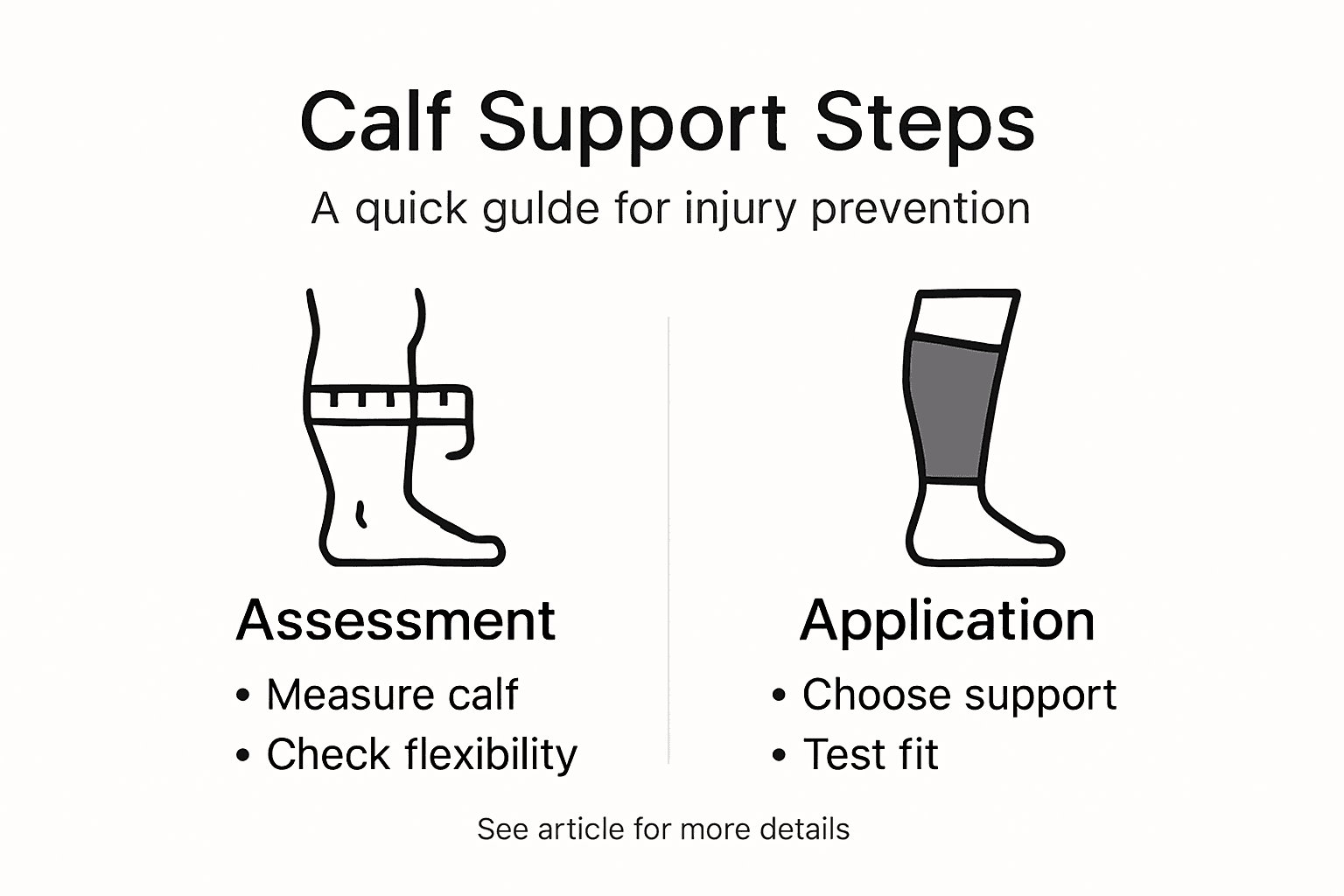
Next, analyze your muscle function through range of motion tests and flexibility assessments. Pay attention to how your muscles respond during warm-up exercises and track any discomfort or limited mobility.
Pro tip: Photograph your calf muscles from multiple angles during stretching to track changes and identify asymmetries that might indicate support needs.
To streamline your assessment, here’s a summary of core calf muscle evaluation methods:
| Method | What It Measures | When to Use |
|---|---|---|
| Calf circumference | Muscle mass and baseline size | Initial support selection |
| Flexibility test | Range of motion and tension | During stretching routines |
| Warm-up response | Mobility under activity | Before workouts |
| Photograph review | Shape changes or asymmetry | Monthly progress checks |
Step 2: Select optimal calf support product
Selecting the right calf support product is crucial for preventing muscle strain and maximizing athletic performance. Your goal is to find a solution that provides protection without compromising your natural movement.
When choosing calf support, focus on biomechanical properties that influence muscle performance. Look for products that balance several key characteristics:
- Lightweight and comfortable design
- Minimally restrictive material
- Proper anatomical conformity
- Moisture-wicking capabilities
- Targeted compression zones
The right calf support adapts to your body, not the other way around.
Compression levels play a significant role in your selection. Different activities require different support intensities:
- Light compression for daily activities
- Moderate compression for training
- Firm compression for high-intensity performance
Consider your specific needs based on your athletic profile. Runners might require different support compared to weightlifters or cyclists. Material flexibility is another critical factor – the product should move with your muscles without bunching or sliding.
Here’s a comparison of calf support types for different athletic profiles:
| Athletic Profile | Recommended Support Type | Typical Compression Level | Key Benefit |
|---|---|---|---|
| Runner | Graduated sleeve | Moderate | Reduces vibration, prevents fatigue |
| Weightlifter | Firm wrap or brace | Firm | Enhances stability, protects during heavy lifts |
| Cyclist | Lightweight sleeve | Light to moderate | Supports repetitive motion, minimizes chafing |
| Team Sport Athlete | Flexible sleeve | Moderate | Allows agility, reduces injury risk |
Pro tip: Try on multiple sizes and walk around the store to ensure the support feels natural and doesn’t restrict your range of motion.
Step 3: Apply calf support correctly
Applying calf support requires precision and careful attention to detail. Your goal is to maximize protection while maintaining natural muscle movement and circulation.
Start by positioning the support over muscle landmarks with strategic precision. The support should cover key muscle groups without restricting blood flow:
- Align the support directly over the gastrocnemius and soleus muscles
- Ensure even, consistent compression
- Avoid wrinkling or bunching of the material
- Check for comfortable but firm fit
- Verify no pinching or uncomfortable pressure points
Proper application transforms a simple support into a powerful injury prevention tool.
The application technique matters as much as the product itself. Begin by gently stretching the support material, then carefully wrap it around your lower leg. Start at the bottom near your ankle and work upward, smoothing out any potential wrinkles as you go.

Pay close attention to tension and mobility. The support should feel snug enough to reduce muscle vibration but not so tight that it impairs circulation. Test your range of motion after application – you should be able to move freely without restriction.
Pro tip: Stand in front of a mirror during application to ensure symmetrical placement and consistent tension on both legs.
Step 4: Test fit and comfort
Testing your calf support for optimal fit and comfort is crucial to ensuring maximum protection and performance during athletic activities. Your goal is to verify that the support enhances your muscle function without creating unnecessary restrictions.
Standardized performance testing protocols can help validate the effectiveness of your calf support. Conduct a comprehensive assessment through these key evaluation methods:
- Walk and move naturally with the support in place
- Check for range of motion without pinching or binding
- Assess compression consistency across muscle groups
- Monitor skin sensation and potential irritation points
- Evaluate overall comfort during different movement patterns
The right support feels like a second skin – responsive, protective, and barely noticeable.
Dynamic movement testing is essential for understanding how your calf support performs under real-world conditions. Perform several specific tests:
- Perform light jogging in place
- Do walking lunges
- Complete several calf raise exercises
- Simulate your primary sport’s movement patterns
Pay attention to subtle comfort indicators. The support should feel like a supportive layer that moves with your muscles, not a restrictive barrier. If you experience any sharp pinching, excessive sweating, or reduced circulation, you may need to adjust the size or style of your support.
Pro tip: Wear the support for a short trial period before purchasing to ensure complete compatibility with your body and activity level.
Step 5: Monitor performance and adjust
Continuous monitoring of your calf support’s performance is essential to maintaining injury prevention and optimizing athletic function. Your goal is to create an adaptive strategy that responds to your body’s changing needs and workout demands.
Performance tracking involves systematic evaluation of multiple physiological indicators throughout your training cycle. Pay close attention to these key performance metrics:
- Muscle fatigue levels
- Pain or discomfort sensations
- Range of motion changes
- Perceived level of muscle support
- Recovery time between workouts
Effective monitoring transforms your support from a static device to a dynamic performance tool.
Adjustment strategies should be methodical and responsive. Track your body’s response through these systematic approaches:
- Document your experiences after each workout
- Note any changes in muscle performance
- Assess comfort and support levels
- Compare performance with and without support
Be prepared to modify your support based on evolving athletic demands. Some athletes might need different compression levels during different training phases or require periodic replacement as muscle conditioning changes.
Pro tip: Photograph your calf muscles before and after wearing support to visually track any changes in muscle shape, swelling, or performance indicators.
Protect Your Calves and Lower Limbs with Expert Support from KneeSolution
Struggling to find the perfect calf support that prevents injury without limiting your movement This article highlights the importance of assessing your calf muscle needs and selecting the right compression level to enhance performance and reduce muscle strain. At KneeSolution we understand these challenges and offer comprehensive Leg Protection Accessories designed for targeted calf compression and muscle stabilization tailored to your athletic profile.
Experience professional-grade lower limb support trusted by athletes and active individuals alike. Enhance your injury prevention strategy today with products that combine comfort, breathability, and innovative compression technology Visit KneeSolution now and take the first step toward pain-free movement and lasting protection.
Frequently Asked Questions
How do I assess my calf support needs?
Assess your calf support needs by evaluating your muscle mass, fitness level, and previous injuries. Measure your calf circumference and test flexibility to understand your specific requirements; this will guide your choice of support products.
What are the key features to look for in a calf support product?
When selecting calf support, prioritize lightweight materials, anatomical conformity, and targeted compression zones. Ensure the support is comfortable and moisture-wicking to enhance your performance during activities.
How do I apply calf support correctly?
Apply calf support by positioning it over the gastrocnemius and soleus muscles with even, consistent compression. Start at the ankle and move upward while ensuring there are no wrinkles or pinching to maximize injury prevention benefits.
What should I do to test the fit and comfort of my calf support?
To test the fit, wear the calf support and move naturally through specific exercises like jogging or lunges. Check for any discomfort or restriction in movement; the support should feel snug, like a second skin without causing pinching or discomfort.
How can I monitor the performance of my calf support?
Monitor your calf support’s performance by tracking muscle fatigue, comfort levels, and recovery times. Document your experiences after workouts and make adjustments as needed to ensure optimal support and function over time.
What adjustments should I consider if my calf support is uncomfortable?
If your calf support feels uncomfortable, reassess the fit, making sure it’s not too tight or restrictive. Consider trying a different size or style if discomfort persists, as changing support levels may help align with your workout intensity.
